Do Expensive Guitar Cables Make a Difference?
Walk into any guitar store and you'll see cables ranging from $5 to $100. Ask any online forum whether expensive cables are worth it, and you'll get fifty different opinions. Some players swear they hear a difference; others insist it's all marketing snake oil.
The real question isn't whether expensive cables sound different. It's whether they're worth the investment. And the answer depends on what you're actually paying for.
What Cheap Cables Get Wrong
Let's start with what happens when you buy the cheapest cable on the rack.
Most budget cables fail in predictable ways. The solder joints inside the connector are often cold or insufficient, creating intermittent connections that cut out when you move on stage. The shielding is thin or poorly grounded, letting electromagnetic interference from lights, power supplies, and other gear bleed into your signal as hum and buzz.
The outer jacket is usually thin PVC that stiffens in cold weather and cracks with repeated coiling. The strain relief at the connector is either nonexistent or cosmetic, meaning the internal wires fatigue and break right where the cable enters the plug.
Over time, the copper conductors oxidize. Even if the cable works fine out of the package, six months of exposure to moisture and temperature changes degrades the connection. You start getting crackling, intermittent signal, or dead spots when the cable is bent a certain way.
The connectors themselves are often the first point of failure. Generic barrel connectors use soft metals that bend easily, thin contact springs that lose tension, and plastic housing that cracks under normal stress. When you plug a cheap cable into your guitar or amp, the fit is loose from day one. Give it a few weeks of regular use, and the connection becomes unreliable enough to cause dropouts and noise.
If you gig regularly or even just practice consistently, that $5 cable will fail. Maybe not this month, but soon. And when it does, you'll buy another one. And another. Over a few years, you've spent $30 on cables that kept letting you down.
The worst part isn't the money. It's the uncertainty. Every time you plug in, there's a nagging question: is this the gig where the cable dies? Is that crackling sound normal, or is it about to cut out completely? You can't trust your gear, and that mental overhead is exhausting.
What Actually Matters in a Cable
Not all premium cables are created equal, but the good ones get four things right: shielding, connector quality, capacitance, and mechanical durability.
Shielding and Noise Rejection
Your guitar signal is tiny compared to the electromagnetic noise around you. Stage lights, power transformers, digital gear, even your phone can all induce hum into an unshielded or poorly shielded cable.
Quality cables use dense braided copper shielding or conductive spiral wraps that reject interference. The shield is connected properly to ground at the connector, creating a Faraday cage around your signal wire. This isn't audiophile voodoo; it's basic physics. A well-shielded cable will be dead silent even in electrically noisy environments.
If you've ever experienced guitar cable hum and noise, you know what poor shielding sounds like. That buzzing when you walk near a light dimmer, or the radio station bleeding through your amp? That's inadequate shielding. A properly shielded cable eliminates that entirely.
Connector Quality
The plug is where most cables fail first. Generic molded connectors use low-quality metal contacts and minimal solder. The barrel is often just friction-fit plastic that loosens over time.
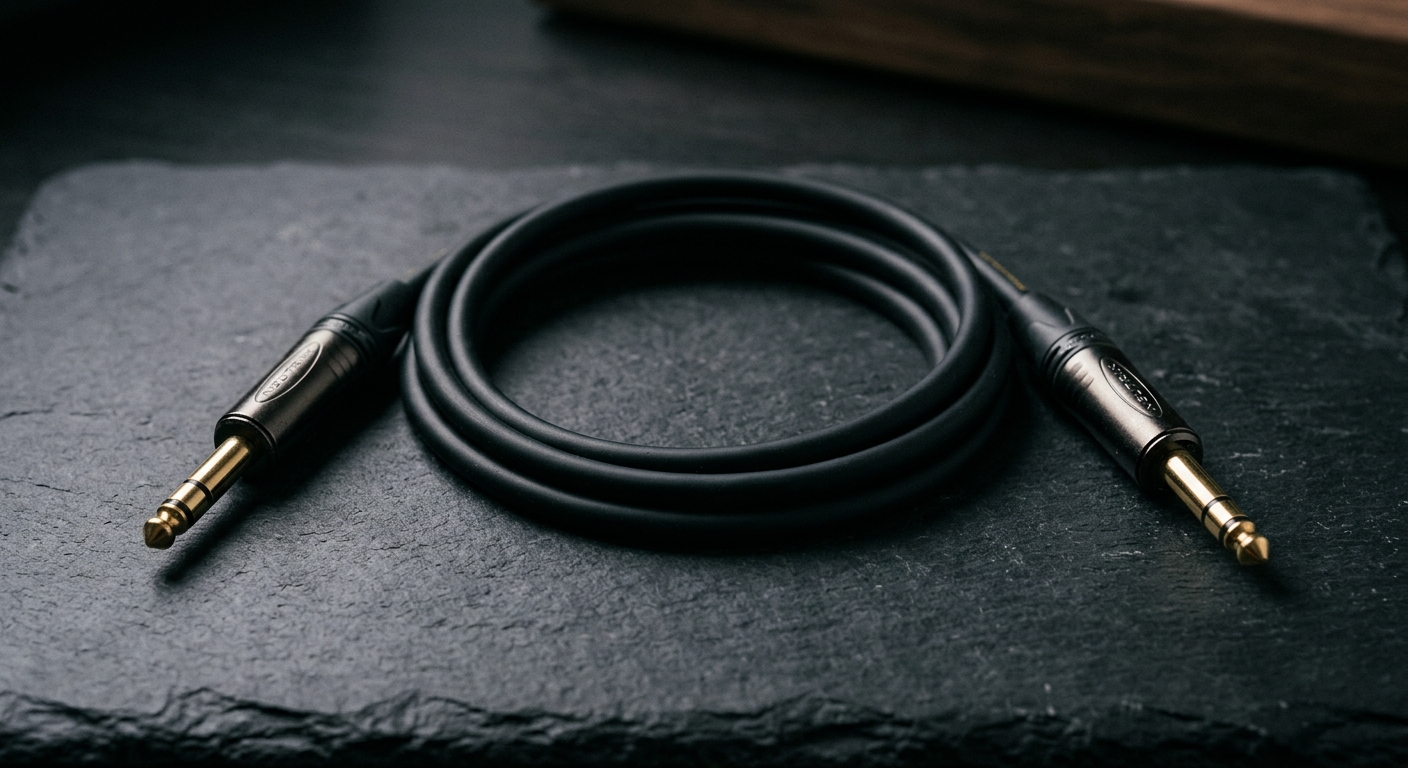
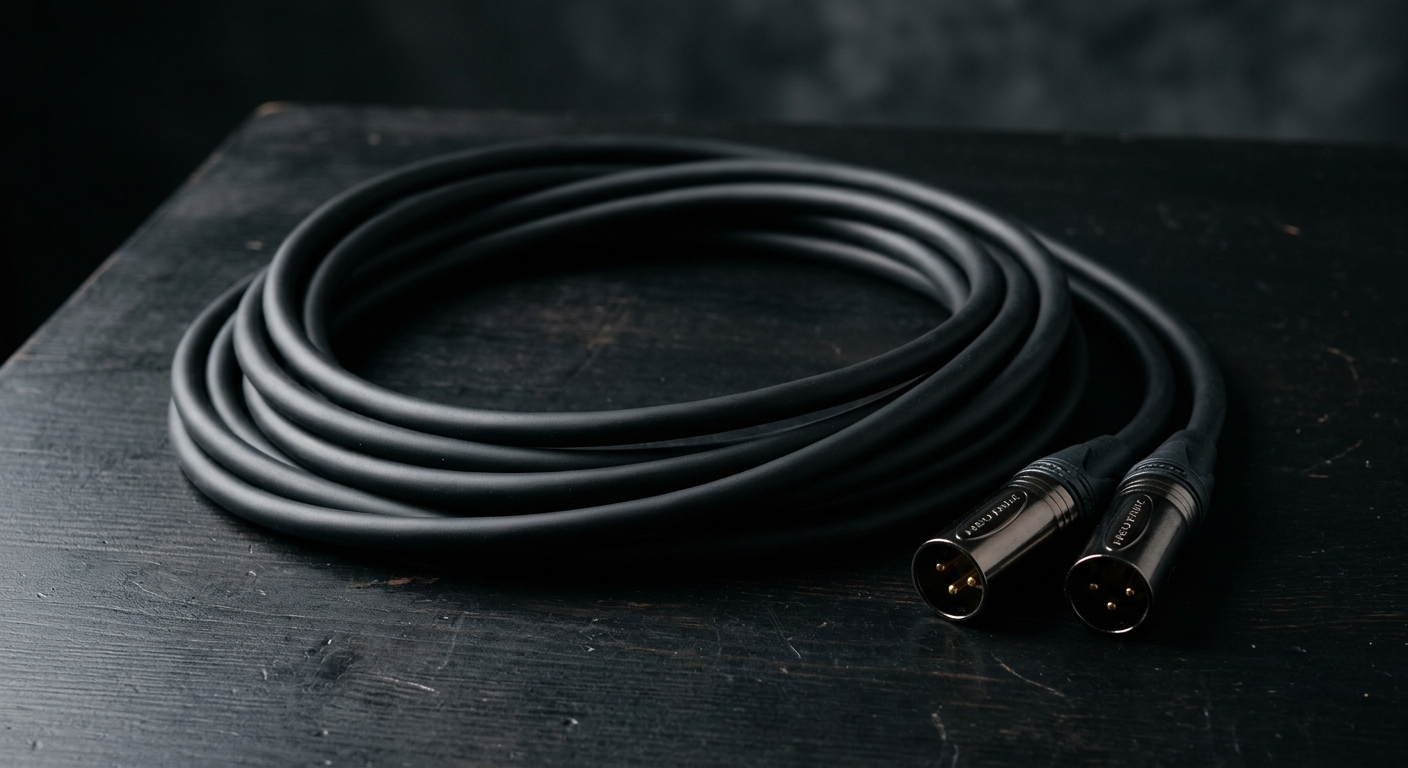
Premium cables use connectors from manufacturers like Neutrik or Amphenol. These have machined metal barrels, heavy-duty strain relief, and gold-plated contacts that resist oxidation. The connection is solid, the grip is firm, and the strain relief actually protects the internal wires from fatigue.
You can hear the difference when you plug in. A quality connector clicks solidly into your jack and stays put. A cheap one wiggles, feels loose, and eventually stops making reliable contact.
Cable Capacitance
This one is subtle but real. Every cable has capacitance, which means it acts like a tiny filter on your guitar's signal. High capacitance rolls off high frequencies, making your tone darker and less detailed.
The physics are straightforward: your guitar's pickups and volume pot form a resonant circuit with the cable's capacitance. Higher capacitance lowers the resonant peak, filtering out treble and making your tone sound duller. For short cable runs (under 10 feet), the difference is minimal. But as you add length or use multiple cables, the effect compounds.
Most guitarists won't notice small differences in capacitance, but it becomes audible in long cable runs or if you're using bright single-coil pickups. Quality cables use low-capacitance designs that preserve your guitar's natural tone without darkening it.
For most players, this matters less than shielding and connector quality. But if you're chasing every bit of clarity and detail in your sound, cable capacitance is worth considering. If you've ever noticed your tone getting darker as you added cable length, capacitance is the reason.
Mechanical Durability
A good cable is built to survive real-world use. The jacket is thick and flexible, made from materials that resist abrasion, kinking, and temperature extremes. The internal conductors are stranded copper with enough flexibility to handle thousands of coiling cycles without breaking.
Think about how you actually use cables. You coil them up after every session. You step on them during gigs. You pack them in cases, yank them across stages, and bend them around pedalboards. A cable that can't handle that mechanical stress will fail, no matter how good its electrical specs are.
Quality cables use jackets made from materials like braided nylon, reinforced rubber, or durable thermoplastic that flex without memory. They don't get kinked, they don't crack in cold weather, and they don't get sticky in hot environments. The strain relief is actually engineered to protect the joint where the cable meets the connector, distributing stress across a larger area instead of concentrating it at a single failure point.
The difference between a cable that lasts three months and one that lasts ten years comes down to these mechanical details. Quality materials and proper strain relief mean the cable keeps working no matter how you treat it.
The Lifetime Cost Argument
Here's where the math gets interesting.
A $5 cable that fails in a year costs you $5 per year, forever. Over ten years, that's $50, plus the hassle of replacing it every time it dies. And that's assuming you only need one cable. Most players own several instrument cables, patch cables for their pedalboard, and spares for backup.
Now consider a cable with a lifetime guarantee. You pay more upfront, but you never buy another one. Forever Cables, for example, backs every cable with a true lifetime warranty. If it ever fails, you get a replacement. No questions, no time limit, no receipt required.
That changes the economics completely. Instead of paying $5 every year, you pay once and you're done. The cable that seems expensive upfront becomes the cheapest option over time.
And that's before you factor in the cost of downtime. A cable that cuts out during a gig doesn't just cost $5 to replace. It costs you the embarrassment of stopping a song, the frustration of troubleshooting in front of an audience, and potentially lost opportunities if your gear fails at the wrong moment.
Players who hate downtime buy quality cables for the same reason they buy backup gear: reliability is worth paying for.
When Expensive Isn't Better
Not all expensive cables are worth the price. Some brands charge premium prices for cosmetic features, exotic materials, or vague claims about "tone enhancement" that don't hold up under scrutiny.
If a cable costs $80 because it has hand-braided silk covering or oxygen-free copper blessed by audio engineers, you're paying for marketing. The functional components that actually matter (shielding, connectors, capacitance, durability) don't require exotic materials or sky-high prices.
Be skeptical of cables that promise better tone without explaining the mechanism. Claims like "warmer mids" or "enhanced clarity" are meaningless unless there's a technical reason (like lower capacitance or better shielding) to support them. A cable is a wire; it doesn't add anything to your signal. The best it can do is not subtract anything.
The sweet spot for most players is cables that use quality components from known manufacturers, have proper shielding and strain relief, and back up their claims with a real warranty. You don't need the most expensive cable on the market. You need one that works and keeps working.
Think about what you're actually buying. Are you paying for engineering and durability, or are you paying for exotic marketing and premium branding? The difference matters.
How to Choose
If you're trying to decide whether a premium cable is worth it, ask these questions:
Do you gig or play in noisy environments? If yes, shielding matters. A well-shielded cable will save you from hum, buzz, and interference that cheap cables can't reject. This is especially important for pedalboards; if you're connecting multiple pedals, proper cable organization minimizes noise and keeps your signal clean.
Have you had cables fail on you before? If you've experienced intermittent connections, crackling, or dead cables, connector quality and mechanical durability are worth paying for.
Do you want to buy once and be done? If the idea of replacing cables every year sounds annoying, look for a lifetime warranty. The upfront cost is higher, but you never think about it again.
Are you chasing maximum tone clarity? If you're running long cable lengths or using bright pickups, low capacitance makes a measurable difference. For most players, it's a nice-to-have rather than essential.
For most players, the answer is clear: a quality cable with good shielding, solid connectors, and a lifetime guarantee is the best value. You pay more upfront, but you save money and frustration over time.
Why Forever Cables Exist
Forever Cables was built for players who hate downtime. Every cable is made with Neutrik connectors, dense braided shielding, and a low-capacitance design that preserves your tone. The jacket is durable enough to survive years of gigging, and the lifetime guarantee means you're covered no matter what happens.
You buy it once, and you never think about cables again. No more dead cables before a gig, no more crackling connections, no more wondering if your signal is getting through cleanly. It just works.
That's what you're paying for: reliability you can trust, backed by a warranty that actually means something.
If you've ever had a cable fail at the worst possible moment, you know why that matters.
The Bottom Line
Do expensive guitar cables make a difference? Yes, if you're buying quality components and long-term reliability. No, if you're just paying for marketing hype and cosmetic features.
The cables that matter are the ones that reject noise, use solid connectors, preserve your tone, and survive years of real-world use. The cables that don't matter are the ones covered in exotic materials and vague promises.
And the cables that make the most sense are the ones you only have to buy once. A lifetime guarantee changes the math completely. Instead of replacing cheap cables every year, you invest in one that lasts forever.
For players who value reliability, that's not an expense. It's peace of mind.
Ready to stop worrying about cables? Check out the full Forever Cables lineup and find the right cable for your setup. Every cable comes with a lifetime guarantee, so you can buy once and be done.
Built for This
Forever Cables are built with Neutrik connectors, dense braided shielding, and low-capacitance design. Backed by a lifetime guarantee, they're the last cables you'll ever buy.
Stay in the loop
New gear guides, limited promos, and launch updates. No spam.