Best Bass Guitar Cables: Do You Need a Different Cable?
If you play bass, you have probably used the same cables as the guitar players in your band. Standard instrument cables. Quarter-inch jacks. Nothing special. And for the most part, they work fine.
But here is a question that does not get asked nearly enough: should bass guitars use different cables than six-string guitars?
The short answer is yes, but not for the reasons most people think. Bass guitars operate in a completely different frequency range, and that frequency range interacts with cable properties in ways that can either preserve or destroy your low-end punch.
This guide breaks down why bass cables matter, what to look for, and which cables actually deliver the performance bass players need. By the end, you will know exactly what makes a cable "bass-optimized" and whether your current cables are holding your tone back.
Why Bass Frequencies Change Everything
The fundamental difference between bass and guitar is not just pitch. It is the physics of how low-frequency signals behave in a cable.
A standard guitar low E string vibrates at 82 Hz. A four-string bass low E vibrates at 41 Hz. A five-string bass with a low B drops to 31 Hz. These are not just lower notes. They are waveforms that interact differently with cable capacitance, resistance, and shielding.
The Capacitance Problem
Every cable acts as a capacitor. As the signal travels through the cable, the conductor and the shield form two plates of a capacitor, with the insulation acting as the dielectric. This capacitance creates a low-pass filter that rolls off high frequencies.
For guitar players, this means losing some treble sparkle on long cable runs. Annoying, but manageable.
For bass players, the problem is more insidious. High capacitance does not just affect the highs you can hear; it affects the harmonic overtones that give your bass note definition and presence in a mix. Without those harmonics, your low E sounds muddy, indistinct, and lacks the attack that cuts through a band.
Here is the critical spec: Cable capacitance is measured in picofarads per foot (pF/ft). Most standard instrument cables fall between 30-50 pF/ft. For bass, you want to stay below 30 pF/ft, especially on runs longer than 15 feet.
Cable Length Hits Bass Harder
A 10-foot guitar cable with 40 pF/ft capacitance has a total capacitance of 400 pF. That is enough to slightly dull your highs, but most guitar tones can tolerate it.
A 20-foot bass cable with the same 40 pF/ft spec has 800 pF of total capacitance. At that level, you are not just losing high-frequency harmonics; you are losing the fundamental character of your bass tone. The note loses definition, attack, and clarity.
This is why professional bassists are obsessive about cable length. Longer is not always better. Shorter cables with lower capacitance preserve more of your original tone.
Active vs Passive Bass: Do You Need Different Cables?
This is where bass cable requirements split into two categories.
Passive pickups are high-impedance devices. They are sensitive to cable capacitance because the pickup, cable, and amp input form a resonant circuit. High capacitance shifts that resonance point downward, which means you lose the harmonic content that makes your bass sound present and articulate.
For passive bass: Cable quality is critical. Low capacitance is non-negotiable. Long cable runs are the enemy.
Active pickups include onboard preamps powered by a 9V battery. That preamp converts the high-impedance pickup signal into a low-impedance output before it hits the cable.
Low-impedance signals are far less sensitive to cable capacitance. An active bass can tolerate longer cable runs and higher-capacitance cables without significant tone loss.
For active bass: Cable quality still matters, but you have more flexibility. Capacitance is less critical; build quality and noise rejection become the primary concerns.
That said, even with active pickups, a low-capacitance cable will always outperform a high-capacitance cable. It is just less of a night-and-day difference than with passive pickups.
The Real-World Test: What You Actually Hear
Theory is useful, but let us talk about what happens when you A/B test cables on a real bass rig.
Test setup: Fender Precision Bass (passive pickups), Ampeg SVT-CL (all-tube head), Cable A: Standard 20-foot instrument cable (45 pF/ft, 900 pF total), Cable B: Low-capacitance 20-foot cable (24 pF/ft, 480 pF total), Test notes: Open E, A, D, and G strings.
With Cable A (standard capacitance): The low E sounds thick but mushy. There is plenty of low-end weight, but the note does not have a defined start. Playing fast passages, the notes blur together. In a band mix, the bass sits too far back, lacking the presence to cut through guitar and drums.
With Cable B (low capacitance): The low E has punch. You hear the attack of the string, the body of the note, and the harmonic overtones that give it definition. Fast passages stay articulate. In a mix, the bass sits forward without needing to crank the volume.
The difference is not subtle. On passive bass pickups, cable capacitance is one of the biggest tone-shaping factors in your signal chain.
Running the same test with a Music Man StingRay (active pickups): Cable A sounds good. Cable B sounds slightly better, with a bit more top-end clarity. The difference is still audible, but it is much smaller. Active pickups compensate for capacitance issues, making cable choice less critical but not irrelevant.
What Makes a Cable "Bass-Optimized"?
Marketing departments love the phrase "bass cable," but what does it actually mean?
The Non-Negotiables: Low capacitance (under 30 pF/ft). This is the single most important spec. Anything above 30 pF/ft will degrade your tone on passive basses, especially over longer runs. Quality connectors: Neutrik, Switchcraft, and Amphenol are the gold standards. Cheap connectors introduce resistance, create intermittent connections, and fail under stress. Proper shielding: Bass signals are low-frequency and high-energy. Poor shielding lets in hum, buzz, and RF interference. Look for 90%+ shielding coverage. Oxygen-free copper conductors: OFC wire has lower resistance than standard copper, which preserves signal integrity over longer runs.
The Nice-to-Haves: Durable jacket material. Touring bassists need cables that survive being stepped on, coiled tightly, and thrown in road cases. PVC jackets are standard; reinforced jackets are better. Flexible construction: Pedalboard routing requires cables that do not fight you. Overly stiff cables create tension on jacks and make tight layouts frustrating. Strain relief: Quality strain relief at both ends prevents the solder joints from breaking under repeated flexing.
Best Bass Guitar Cables: What to Buy
Here are the cables that actually deliver on the promise of bass-optimized performance.
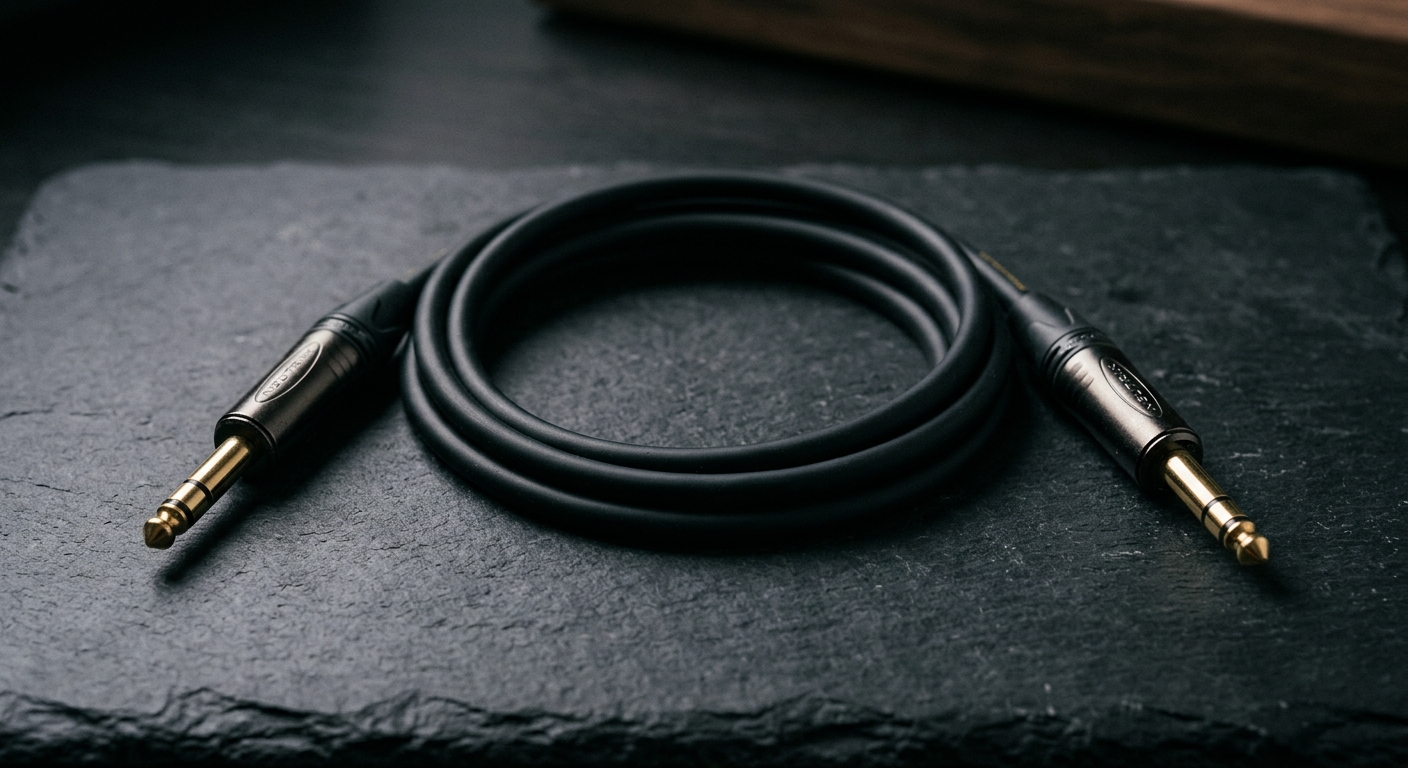
Best Overall: Forever Cables Bass Instrument Cable. Specs: Capacitance: 24 pF/ft (Canare GS-6) or 36.5 pF/ft (Mogami W2524). Connectors: Neutrik (hand-soldered). Shielding: 90-95% coverage. Warranty: Lifetime guarantee.
Forever Cables are hand-built in America using premium Mogami or Canare cable stock. You choose the length, connector type, and whether you want Mogami (studio standard, slightly higher capacitance) or Canare (lower capacitance, better for bass).
The real differentiator: lifetime guarantee. If the cable ever fails for any reason, you get a free replacement. No time limit. No questions asked.
For bass players, this eliminates the tradeoff between tone and durability. Canare GS-6 cable delivers the low capacitance passive basses need, while the lifetime guarantee ensures you never have to replace it.
Runner-Up: DIY with Canare GS-6 and Neutrik Connectors. If you have soldering skills, building your own cables with Canare GS-6 bulk cable and Neutrik connectors gives you excellent performance at a lower cost. Why this works: Canare GS-6 has 25.4 pF/ft capacitance (excellent for bass). Neutrik connectors are bulletproof. You control the exact length you need. Why it is not for everyone: Bad solder joints ruin performance. No warranty if something fails. Time investment for each cable.
If you are building a large cable loom and enjoy the DIY process, this is a solid option. If you want reliability and do not want to troubleshoot cold solder joints, pre-made cables with guarantees are the better choice.
Budget Option: Mogami Gold Instrument Cable. Mogami pre-made Gold series cables use the same W2524 cable found in professional studios, with Neutrik connectors and solid construction. Pros: Proven cable stock. Quality connectors. Widely available. Cons: Higher capacitance (36.5 pF/ft) than Canare. Only 1-year warranty. Not as durable as hand-built options. For active basses or short cable runs on passive basses, Mogami Gold is a reliable choice. For long runs on passive basses, the capacitance starts to add up.
To Avoid: Generic Budget Cables. You will find plenty of $10-15 cables at big-box music stores. They work, but they compromise in every area that matters for bass: High capacitance (often 50+ pF/ft). Cheap connectors that fail prematurely. Poor shielding that introduces noise. Weak strain relief that breaks solder joints. For guitar, you might get away with it. For bass, especially passive bass, these cables actively degrade your tone.
When Cable Quality Matters Most
Not every playing situation demands premium cables. Here is when cable choice makes the biggest difference.
Studio Recording: In the studio, every detail matters. You are capturing a performance that will be listened to thousands of times, on systems that reveal every flaw. Cable requirements: Lowest possible capacitance. Maximum noise rejection. Short runs (10-15 feet max). This is where Forever Cables with Canare GS-6 stock shines. You get studio-grade performance with the peace of mind that comes from a lifetime guarantee.
Live Performance: On stage, durability and noise rejection become priorities. You need cables that will not fail mid-set and will not pick up interference from stage lighting, wireless systems, and other electronic noise sources. Cable requirements: Rugged construction. High shielding coverage. Moderate capacitance. Forever Cables hand-soldered construction and lifetime guarantee eliminate the fear of on-stage cable failure. If anything goes wrong, you get a replacement.
Home Practice: For bedroom practice through a small amp, cable quality matters less. You can get away with budget cables, especially if you are playing an active bass. That said, if you are serious about bass and want to develop your ear for tone, using quality cables from the start ensures you are hearing your actual bass sound, not a capacitance-filtered version of it.
The Forever Cables Difference
Here is what sets Forever Cables apart for bass players:
You choose the cable stock. Want the lowest capacitance for passive bass? Choose Canare GS-6 (25.4 pF/ft). Want the studio standard with maximum flexibility? Choose Mogami W2524 (36.5 pF/ft). Both are hand-built to the same exacting standards.
Custom lengths. No more paying for 25 feet of cable when you only need 15. No more excess slack creating capacitance you do not need.
Hand-soldered in America. Every cable is built by hand, tested under load, and inspected before it ships. No mass-produced factory cables with inconsistent quality control.
Lifetime guarantee. The cable fails for any reason? We replace it. Road wear? Replaced. Connector failure? Replaced. Accidental damage? Replaced. No time limit.
For bass players, this is the solution to the "tone vs durability" dilemma. You get low-capacitance cable that preserves your tone, hand-built construction that survives road abuse, and a guarantee that eliminates the risk of buying premium cables.
Final Verdict: Do Bass Players Need Different Cables?
Yes, if you play passive bass. The combination of low-frequency signals and high-impedance pickups makes passive basses extremely sensitive to cable capacitance. A standard guitar cable will work, but it will degrade your tone, especially on runs longer than 15 feet.
For passive bass players: Invest in low-capacitance cables (under 30 pF/ft). The difference is audible and significant.
For active bass players: Cable quality still matters, but you have more flexibility. Focus on build quality and noise rejection rather than obsessing over capacitance.
For all bass players: Cheap cables are a false economy. They fail faster, sound worse, and cost you more over time when you have to keep replacing them.
The smart move: Buy once, buy right. Forever Cables give you premium Mogami or Canare cable, Neutrik connectors, American craftsmanship, and a lifetime guarantee. You will never need to buy another bass cable again.
Frequently Asked Questions
Can I use a regular guitar cable for bass? You can, but you should not on passive basses. Regular guitar cables often have 40-50 pF/ft capacitance, which will muddy your low end and kill your harmonic overtones. For active basses, regular cables work better but still are not optimal.
How much does cable length affect bass tone? Total capacitance is length times capacitance per foot. A 20-foot cable with 40 pF/ft has 800 pF total capacitance, which significantly rolls off your high harmonics on passive basses. Keep cable runs as short as practical, and use low-capacitance cable for longer runs.
Do I need a special cable for a 5-string bass? The same principles apply, but they matter even more. A low B string (31 Hz) relies heavily on harmonic overtones for definition. High-capacitance cables kill those overtones, making your low B sound muddy and undefined. Low-capacitance cables are essential for extended-range basses.
What is the best cable length for bass? As short as practical. For most stage setups, 15-20 feet is ideal. Under 15 feet is better if you can manage it. Over 20 feet, you should be using wireless or accepting that you will need the absolute lowest-capacitance cable available.
Does cable brand matter more than specs? Specs matter most, but brand correlates with quality. Mogami, Canare, and Belden all publish honest capacitance specs and use quality materials. Generic brands often overstate performance and use inferior copper and shielding.
Should I match my cable to my playing style? If you play fingerstyle or use flatwound strings, your tone is already darker, so low-capacitance cables are essential to preserve what high-end you have. If you play aggressive slap and pop with roundwounds, you have more high-frequency content to work with, but low-capacitance cables still help clarity.
How do I test if my cable is killing my tone? Plug directly into your amp with your current cable and play an open E string. Then use a short patch cable (under 3 feet) with known low capacitance. If the patch cable sounds noticeably brighter, punchier, and more defined, your main cable is holding you back.
Can I use speaker cables for bass guitar? No. Speaker cables are unshielded and designed for high-power signals. Using a speaker cable as an instrument cable will introduce massive amounts of noise and hum. Always use shielded instrument cables with proper connectors.
Built for This
Ready to hear your bass the way it is meant to sound? Explore Forever Cables hand-built bass instrument cables with lifetime guarantees. Choose Canare for lowest capacitance or Mogami for studio standard. Pick your length. Never buy another bass cable again.
Stay in the loop
New gear guides, limited promos, and launch updates. No spam.