Mogami Guitar Cables: Why Studios Swear by Them and What Players Should Know
If you have spent any time researching guitar cables, you have seen the name Mogami. It appears on studio wiring racks at Abbey Road, in the rigs of touring professionals, and in the specs of every high-end cable manufacturer. The reputation is earned: Mogami is a Japanese wire manufacturer that has been building professional audio cable since 1970, and their products are used in more recording studios worldwide than any other brand.
But "Mogami" is a wire manufacturer, not a finished cable brand. Mogami makes the raw cable; somebody else has to cut it, solder connectors to it, and ship it. When you buy a "Mogami guitar cable," you are buying a product built with Mogami wire. The wire itself is only half the story; the connectors, the solder joints, and the build quality of the finished cable matter just as much.
This guide explains the Mogami product line for guitarists, what the model numbers mean, how the cables compare, and what to look for when buying a finished Mogami guitar cable.
The Two Mogami Cables Guitarists Should Know
Mogami makes dozens of cable types for different applications: microphone cable, speaker cable, snake cable, digital cable. For guitar players, two models matter: the W2524 and the W2319.
The Mogami W2524 is their flagship instrument cable. It uses an oxygen-free copper center conductor, a conductive PVC layer for handling noise rejection, dense braided shielding for RF and EMI interference rejection, and a flexible yet durable outer jacket. Capacitance is approximately 24 pF per foot, which is low enough to preserve high-frequency content over runs up to 20 feet without noticeable roll-off. This is the cable that earned Mogami its reputation in the guitar world.
The W2524 is designed for the run from your guitar to your first pedal or amp. It is built to handle the physical abuse of gigging: being stepped on, coiled, dragged across stages, and plugged and unplugged thousands of times. The conductive PVC layer is the key differentiator; it drains triboelectric charge (the static buildup that causes handling noise in cheaper cables) before it reaches the signal path.
The Mogami W2319 is their thinner, more flexible cable designed for short patch runs on pedalboards. It uses the same oxygen-free copper conductor and shielding approach as the W2524, but in a smaller diameter package. Capacitance is slightly higher per foot (around 36 pF per foot), but since patch cables are typically 6 to 18 inches, the total capacitance is negligible. The thinner profile is an advantage on crowded pedalboards where every millimeter of space matters.
Mogami vs. Canare: Two Good Answers to the Same Question
The other name that comes up in every cable discussion is Canare, another Japanese manufacturer with deep roots in professional audio. The comparison is inevitable, and the honest answer is that both companies make excellent wire. The differences are real but subtle.
Canare GS-6 is the most common Canare guitar cable. It has slightly higher capacitance than Mogami W2524 (approximately 34 pF per foot versus 24 pF per foot), but it is a bit stiffer and arguably more durable under repeated physical stress. Many players prefer Canare for patch cables because the stiffer jacket holds its shape on a pedalboard and resists kinking.
Mogami W2524 has lower capacitance and better handling noise rejection, which makes it the better choice for longer instrument cable runs where those specs compound. For a 15 or 20-foot cable connecting your guitar to your board, the Mogami advantage is measurable.
For patch cables (6 to 18 inches), the difference between Canare GS-6 and Mogami W2319 is genuinely hard to hear. Both are excellent, and both are used by professional pedalboard builders worldwide. The choice often comes down to flexibility preference and availability.
At Forever Cables, we use Canare GS-6 in our Workhorse and Right Angle patch cables for its durability and stiffness on pedalboards, and Mogami W2524 in our Stage Cable for its superior handling noise rejection and lower capacitance over longer runs. We chose each wire for the job it does best.
What Makes a Good Mogami Guitar Cable (Beyond the Wire)
The wire is the foundation, but a Mogami guitar cable is only as good as its weakest point. Three things matter beyond the wire itself.
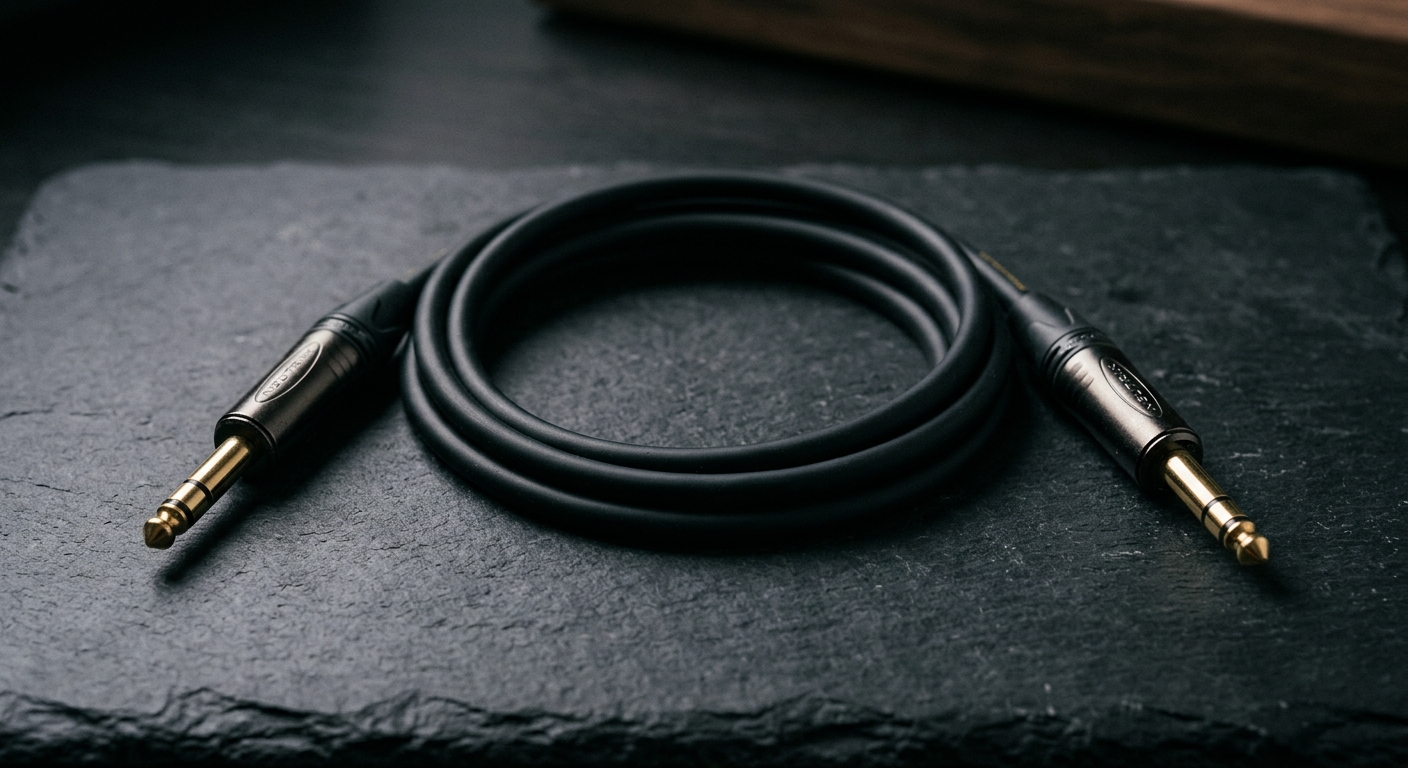
Connectors: Mogami wire is commonly paired with Neutrik connectors. Neutrik NP2X-B (straight) and NP2RX-B (right angle) are the industry standard for professional guitar cables. They use gold-plated contacts that resist oxidation, machined brass bodies that maintain tight tolerances, and a robust strain relief design that protects the solder joint from mechanical stress. Other brands use generic or house-brand connectors; check the specs before you buy.
Solder joints: This is where handmade cables separate from mass-produced ones. A factory cable runs Mogami wire through automated soldering machines that apply solder at speed. A hand-soldered cable gets individual attention at each joint: proper heat, proper flow, proper inspection. The solder joint is where 90 percent of cable failures happen, so the quality of this work determines the cable's lifespan.
Strain relief: When you pull a cable out of a jack by the cable instead of the connector (everyone does it), the strain relief is what protects the solder joint from absorbing that force. Good strain relief distributes pull force across the cable jacket. Bad strain relief is cosmetic only, and the solder joint takes the hit every time.
How to Spot a Quality Mogami Cable
Not every cable labeled "Mogami" is built to the same standard. The wire itself is consistent because it comes from Mogami's factory, but the assembly quality varies enormously. Here is what to check.
Look for named, branded connectors. If the listing says "premium connectors" or "gold-plated connectors" without naming the manufacturer, the connectors are almost certainly generic. Neutrik, Switchcraft, and Amphenol are the established names; if the connector brand is not specified, ask.
Look for hand-soldered construction. Mass-soldered cables are not inherently bad, but hand-soldered cables allow the builder to inspect every joint individually. A builder who hand-solders and tests every cable is taking responsibility for each one.
Look for a warranty that backs the build. The Mogami wire itself is durable, but if the solder joints fail in 18 months, the wire quality is irrelevant. A lifetime guarantee from the builder means they stand behind the assembly, not just the raw material.
Avoid cables where the only selling point is "Mogami." The wire is the starting material, not the finished product. A quality cable pairs Mogami wire with quality connectors, skilled assembly, and a guarantee that covers the whole cable for its entire life.
Do You Need a Mogami Cable?
For instrument cables (the run from your guitar to your board or amp), Mogami W2524 is a strong choice, especially for runs of 15 feet or longer. The lower capacitance and handling noise rejection are real advantages that compound with cable length.
For patch cables on your pedalboard, Mogami W2319 is excellent, but so is Canare GS-6. At 6 to 18 inches, the capacitance difference is inaudible, and the build quality of the connectors and solder joints matters more than the wire brand.
For home practice with a 10-foot cable that never leaves your room, any reasonably well-built cable with decent shielding and connectors will work. Mogami is not wasted here, but the advantages are less pronounced in a short, stationary, low-interference environment.
Where Mogami genuinely shines is on stage and in professional studios: environments with long cable runs, high electrical interference, frequent physical handling, and zero tolerance for signal degradation or unexpected noise. That is the environment Mogami designed for, and it is where the engineering differences become audible and practical.
Built for This
The Forever Cables Stage Cable is built with Mogami W2524 wire and Neutrik connectors, hand-soldered and guaranteed for life. If you want a Mogami guitar cable you never have to replace, this is it.
Stay in the loop
New gear guides, limited promos, and launch updates. No spam.