Best Instrument Cable for Guitar: What Actually Matters
Your instrument cable is the first link in your signal chain. Everything your pickups generate passes through this single cable before it reaches your pedals or amp. If that cable is compromising your signal, nothing downstream can fix it.
Most guitarists upgrade their pickups, pedals, and amp long before they think about the cable connecting them. That is understandable: cables are not exciting. But the difference between a quality instrument cable and a cheap one is audible, measurable, and, over time, expensive in replacements.
This guide covers what actually matters when choosing an instrument cable for guitar or bass, what the specs mean in practice, and how to pick the right cable for your situation.
Instrument Cables vs. Patch Cables: Different Jobs
An instrument cable runs from your guitar to your first pedal (or amp). A patch cable connects pedals to each other on your pedalboard. Both carry the same type of signal, mono unbalanced audio on a 1/4" TS connector, but the design priorities are different.
Instrument cables are longer (typically 10 to 20 feet), which means capacitance has a larger effect on tone. They get stepped on, coiled, dragged across stages, and subjected to constant mechanical stress from movement. They need heavier shielding because they run across open space near power cables, lighting rigs, and other interference sources.
The qualities that make a great instrument cable are: low capacitance to preserve high-frequency content over distance, robust shielding to reject noise in noisy environments, quiet handling so the cable does not transmit microphonic noise when it moves, durable construction that survives years of gigging, and solid connectors that maintain reliable contact through thousands of plug and unplug cycles.
Capacitance: The Spec That Actually Affects Your Tone
Every cable acts as a capacitor. The longer the cable and the higher its capacitance per foot, the more it rolls off high frequencies before your signal reaches the amp. This is not marketing language; it is measurable with an oscilloscope and audible to most players in a blind comparison.
At 10 feet with a low-capacitance cable (around 24 pF per foot, like Mogami W2524), the effect is minimal. At 20 feet with a high-capacitance cable (50+ pF per foot, common in budget options), you lose noticeable presence and string articulation. The signal sounds slightly darker and less defined.
This matters more with passive pickups than active ones. Active pickups have a buffer built in that drives the cable with low impedance, making them less sensitive to cable capacitance. But most guitar players are running passive pickups, which means the cable capacitance directly shapes what the amp receives.
Some players actually prefer the mild high-frequency rolloff of a longer or higher-capacitance cable; it softens an overly bright rig. But the key word is "prefer," not "accept by default." A quality low-capacitance cable gives you the full signal; you can always roll off treble at the amp or with a pedal. A cable that rolls it off for you gives you no choice.
Shielding: Keeping Noise Out
Shielding is the conductive layer wrapped around the center conductor that blocks electromagnetic and radio frequency interference from entering the signal path. Without it, your cable is an antenna.
There are three common shielding types in instrument cables. Spiral-wound shield uses a single layer of copper strands wound helically around the cable. It is the most common type, offers good coverage (typically 85 to 95 percent), and is flexible. The trade-off: spiral shields can generate handling noise (microphonic crackle) when the cable is moved, because the shield strands shift against each other.
Braided shield weaves multiple groups of copper strands in a cross pattern. It provides superior coverage (95 to 98 percent) and better noise rejection, and it generates less handling noise than spiral shields. The trade-off: braided shielding makes the cable slightly stiffer and more expensive to manufacture.
Foil shield uses a thin layer of metallic foil with a drain wire. It provides 100 percent coverage but is fragile and not ideal for cables that get moved frequently. It is more common in fixed studio installations.
For a gigging instrument cable that moves regularly, braided shield is the best choice. For a home or studio cable that stays in one position, spiral shield is fine. Budget cables often use very thin spiral shielding with low coverage, which is where the mysterious buzz comes from when you play near a lighting dimmer or a phone.
Handling Noise and Microphonics
Move a cheap guitar cable while you are plugged in and you will hear it: a low-level crackling or thumping transmitted through the cable. This is microphonic noise, caused by the cable's internal layers shifting against each other and generating a small electrical charge.
Quality cables address this with tighter construction tolerances, conductive PVC layers between the shield and insulation that drain static charge, and denser shielding that resists physical movement.
Mogami W2524, used in the Forever Cables Stage Cable, is specifically designed for low handling noise. The cable body uses a dense construction with an integrated conductive layer that dissipates triboelectric charge before it becomes audible. On stage, where cables get stepped on, pulled, and moved constantly, this is not a luxury feature; it is practical noise reduction.
Connectors: Where Cables Actually Fail
The cable body almost never fails. The solder joint where cable meets connector is where 90 percent of cable failures happen. Under repeated stress from plugging, unplugging, stepping, and pulling, a weak solder joint cracks and develops intermittent contact.
Gold-plated connectors resist oxidation and maintain consistent electrical contact over thousands of insert and removal cycles. Nickel-plated connectors are cheaper but oxidize in humid environments, which increases contact resistance and can introduce noise over time.
The strain relief, the boot or collar where cable exits the connector housing, determines how much mechanical stress reaches the solder joint. Good strain relief distributes pull force across the cable jacket rather than concentrating it at the solder point. Cheap cables often have cosmetic boots that offer no real protection.
For instrument cables that get plugged and unplugged at every gig, connector quality is not optional. It is the difference between a cable that lasts a decade and one that lasts a year.
Length: Use What You Need, Nothing More
Every foot of cable adds capacitance. A 20-foot cable has roughly double the capacitance of a 10-foot cable, and your tone changes accordingly.
For home practice and small stages: 10 feet is usually enough to reach from your guitar to your pedalboard or amp with some room to move.
For medium stages: 15 feet gives you comfortable range without excess capacitance.
For large stages or players who move a lot: 20 feet is the standard. Beyond 20 feet, consider a wireless system or a buffer pedal at the start of your chain to drive the cable with low impedance.
Coiled cables add capacitance beyond their straight length because the coiled geometry increases effective capacitance. A 20-foot coiled cable has more capacitance than a 20-foot straight cable of the same construction.
The simplest rule: use the shortest cable that lets you move freely. If you never walk more than 8 feet from your amp, a 10-foot cable is correct, and it will preserve more high-end than the 20-foot cable you have been using out of habit.
What About Wireless?
Wireless systems eliminate the cable entirely, which eliminates capacitance from the equation. Modern digital wireless units (Line 6, Shure, Sennheiser) transmit signal with negligible latency and no cable-related tone coloration.
The trade-offs: cost (a quality wireless system starts around $200 to $500), batteries or charging management, and potential RF interference in crowded wireless environments.
For players who need 30+ feet of range or who move extensively on stage, wireless is the right solution. For players who stay within 10 to 15 feet of their board, a quality cable with proper capacitance specs will deliver equivalent or better signal quality at a fraction of the cost with zero maintenance.
The Stage Cable: Built for This
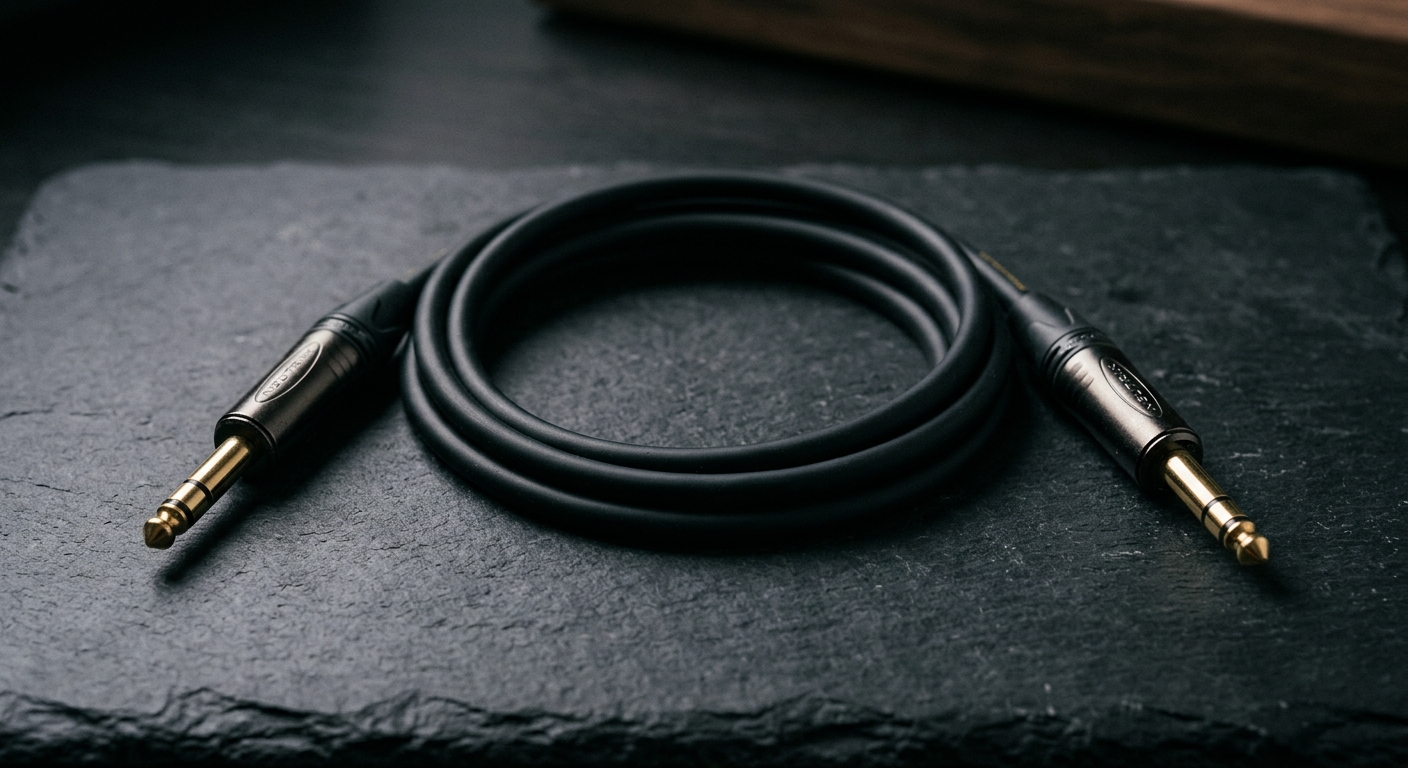
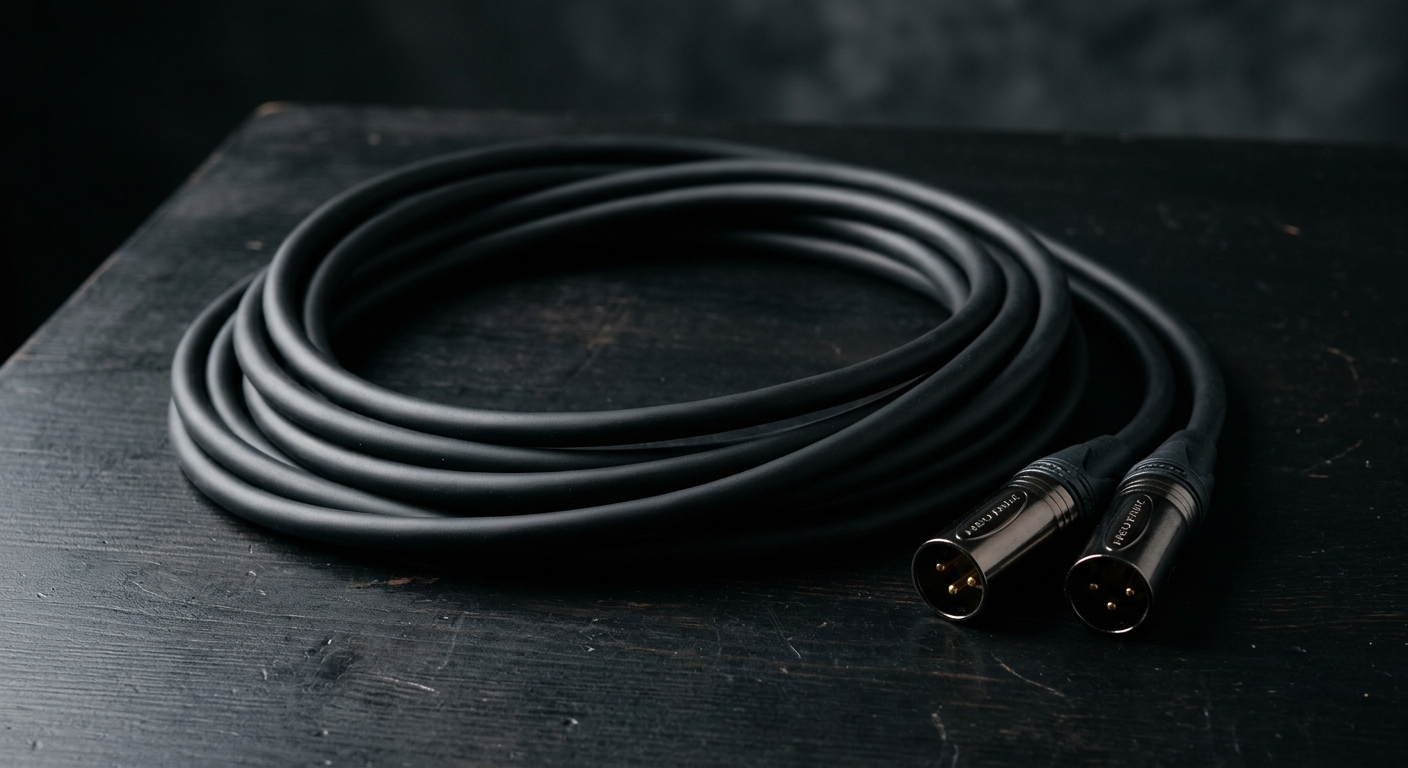
The Forever Cables Stage Cable is built specifically for the instrument cable use case. It uses Mogami W2524, a heavier-gauge, ultra-low-noise cable used by touring professionals worldwide, with Neutrik NP2X-B straight plugs and hand-soldered connections at every junction.
Mogami W2524 was chosen over Canare GS-6 (which we use in our patch cables) because the W2524 is designed for the specific demands of longer runs: lower handling noise, denser shielding, and a construction that holds up to the physical stress of being dragged across stages and coiled hundreds of times.
Available in 10, 15, and 20-foot lengths. Every Stage Cable carries the same lifetime guarantee as our patch cables: if it ever fails, for any reason, we replace it.
How to Choose
If you play at home or in a studio and rarely move your cable: almost any reasonably well-built cable will serve you. Focus on low capacitance and decent connectors.
If you gig regularly in a band: invest in a cable with braided shielding, low handling noise, quality connectors, and a length matched to your stage needs. Replace the cable before it fails you mid-set.
If you are a working musician who depends on your gear night after night: buy a cable with a lifetime guarantee from a maker who stands behind their work. The cost of one replacement cable plus one lost set is higher than the cost of buying right once.
Whatever you choose, the instrument cable is not the place to save money. It carries 100 percent of your signal, it takes 100 percent of the mechanical abuse, and when it fails, it takes your entire rig with it.
Built for This
The Forever Cables Stage Cable is built with Mogami W2524, Neutrik connectors, and hand-soldered joints. Available in 10, 15, and 20-foot lengths with a lifetime guarantee.
Stay in the loop
New gear guides, limited promos, and launch updates. No spam.