Best Guitar Cables for Live Performance (What Actually Survives a Tour)
If you've ever had a cable die mid-set, you know the panic. One second you're locked into the groove, the next you're standing there in silence while the drummer keeps going and the sound guy frantically points at your pedalboard. Every gigging musician learns this the hard way: the cable that works fine in your bedroom will not necessarily survive three months on the road.
The difference between studio cables and stage cables isn't about sound quality. It's about whether the thing will still work after 50 load-ins, 200 soundchecks, and that one night when you had to pack wet gear into a van at 2 AM in the rain. Stage cables take abuse that would kill a studio cable in a week.
What Actually Matters for Live Performance Cables
Studio engineers worry about capacitance and frequency response. You should worry about whether the solder joints will hold up when a drunk guy trips over your cable during the bridge of your best song.
Durability is the entire game. A cable either survives the tour or it doesn't. Everything else is secondary.
Flexibility determines how fast you can coil the cable after the set and whether it stays coiled in your bag. Stiff cables fight you every time you pack up, and they develop memory kinks that stress the conductors.
Strain relief is what keeps the solder joint from breaking when the cable gets yanked, stepped on, or wrapped too tight around your hand while you're trying to clear the stage in four minutes.
Connector quality is where cheap cables die first. The plug is the failure point. Not the wire, not the jacket. The plug.
Length Considerations for Stage Use
Most club stages work fine with 10 to 15 feet. If you're running a wireless system as your main rig, you still need a backup cable, and 10 feet is enough to get you from the pedalboard to the amp if the wireless dies.
Larger stages or festival setups might justify 20 feet, but anything longer than that adds capacitance (which rolls off your high end) and becomes a tripping hazard. If you need more than 20 feet of cable between you and your amp, you probably need a wireless system or a different stage plot.
The ideal cable length is the shortest one that lets you move freely without pulling on the connectors when you step back from the mic.
What Actually Kills Cables on Tour
Cables don't die from being used. They die from being packed, unpacked, stepped on, pulled, and temperature-cycled.
Repeated coiling stresses the wire at the solder joint. Every time you wrap the cable, you're bending the conductors right where they meet the plug. Bad strain relief means that stress goes straight to the solder. Good strain relief distributes the bend over a longer section of cable so the joint doesn't take the full load.
Connector stress happens when someone steps on the plug, when you yank the cable out without unscrewing the locking collar (if it has one), or when the cable gets pulled at an angle while it's plugged in. Cheap molded connectors have no reinforcement at the point where the cable enters the plug. The wire just bends until it breaks.
Temperature swings make cheap solder joints brittle. A cable that goes from a 90-degree stage to a 30-degree van to a 70-degree green room and back again, five nights a week, will develop cracks in the solder if the connection wasn't done right in the first place.
The stuff that doesn't kill cables: normal signal transmission, being plugged and unplugged, getting warm under stage lights. Use kills cables way less than transport and handling.
What to Look for in a Touring-Ready Cable
If you're buying a cable that needs to survive the road, here's what separates the ones that last from the ones that fail.
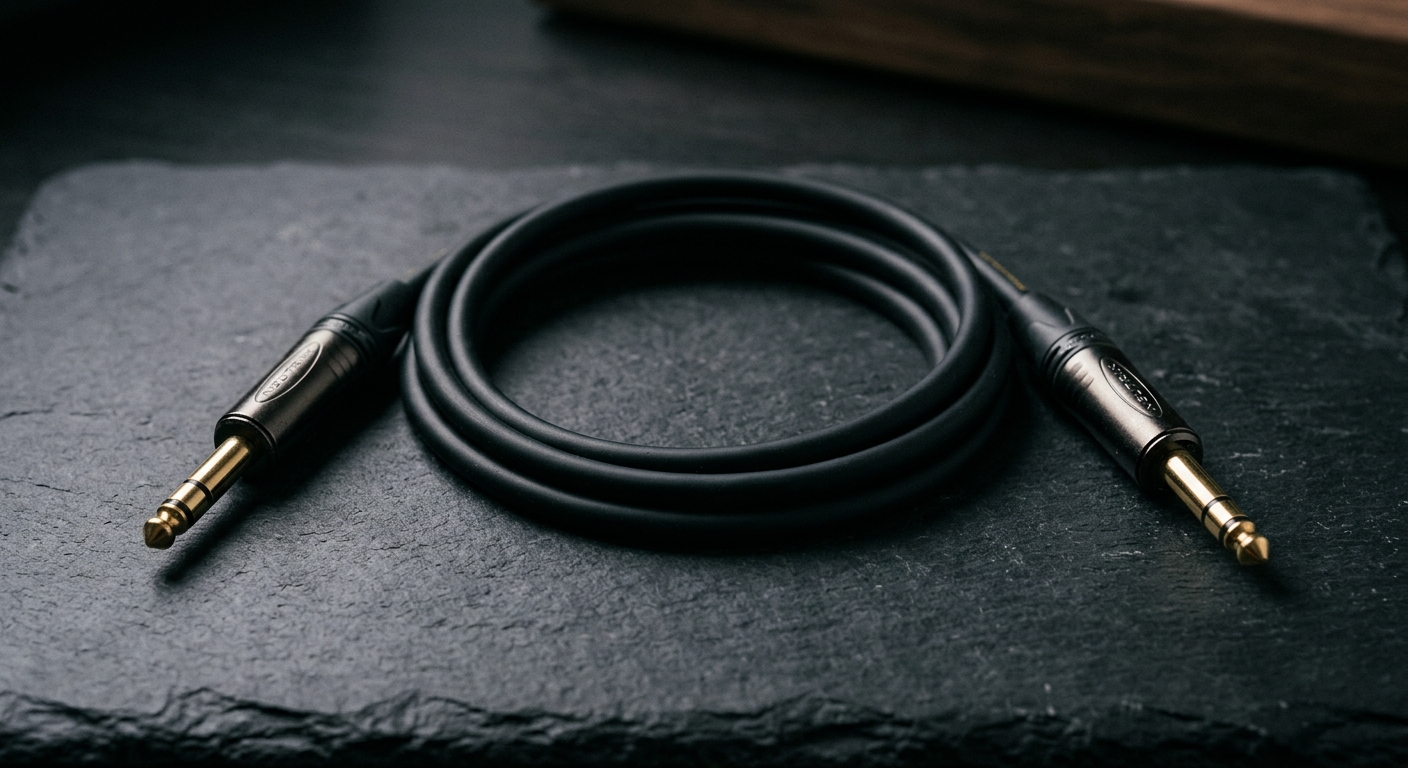
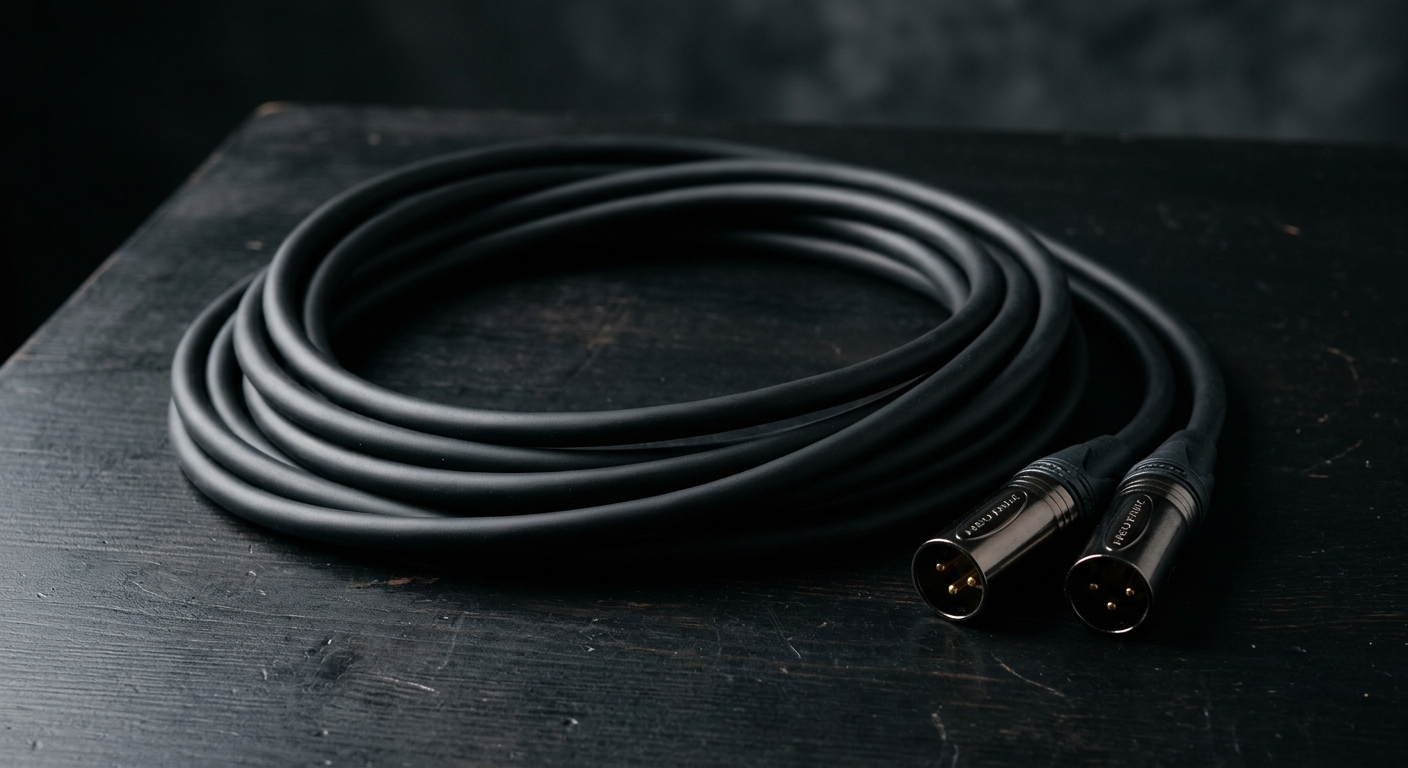
Switchcraft or Neutrik connectors. These are the industry-standard plugs used in professional touring and studio rigs. Neutrik NP2X plugs (or the locking NP2X-B version) have metal shells, internal strain relief, and solder terminals designed to hold up under repeated stress. Switchcraft 280 plugs are built the same way. Both brands have been the standard in professional audio for 40 years because they don't fail.
Serviceable connectors, not molded. A molded connector is one piece of injection-molded plastic with the cable permanently embedded in it. You can't open it, you can't inspect the solder joint, and you can't repair it when it fails. Molded connectors also have no strain relief because there's no separate boot to distribute the bend. When a molded connector breaks, you throw the whole cable away.
A serviceable connector has a metal or hard plastic shell that unscrews so you can inspect or resolder the connection. If the cable fails, you can fix it. If you're on tour and you have a soldering iron in the van, you can repair a Neutrik plug in a parking lot. You can't repair a molded plug at all.
Quality cable jacket and shielding. The actual wire matters, but not the way people think. Mogami W2524, Canare GS-6, and similar professional-grade instrument cables use a braided or spiral shield (not just foil) to reject interference, and a durable PVC or rubber jacket that won't crack or split under normal handling. The shield construction also determines how flexible the cable stays over time.
Cheap cables use thin foil shielding and stiff jackets that develop memory. They work fine when they're new, but after six months they don't coil smoothly and the jacket starts to split near the connectors.
Actual strain relief at the solder joint. This is a short section of flexible tubing or reinforced boot that distributes the bending force over several inches instead of concentrating it at the point where the wire is soldered to the plug terminal. Without it, every time you coil the cable you're bending the wire right at the weakest point.
The Lifetime Guarantee Advantage for Gigging Musicians
A lifetime guarantee on a cable means the company believes their product will not fail under normal use. It also means that if you're on tour and a cable does fail, you're not buying a replacement out of pocket.
Most cable failures happen in the first 90 days (manufacturing defects) or after years of heavy use (cumulative wear). A 90-day warranty protects you from the former but leaves you holding the bag for the latter. A lifetime guarantee means you never pay for a cable twice.
For a gigging musician, this is the difference between a $40 one-time expense and a recurring $15 expense every time a cheap cable dies. Over a two-year period, three cheap cables cost more than one good cable with a lifetime guarantee, and you still had to deal with failures.
Forever Cables Stage Cable: Built for Exactly This Use Case
The Stage Cable is a straightforward implementation of the spec that professional touring rigs have used for decades. Mogami W2524 wire (the same cable used in high-end studio patch bays and stage racks) and Neutrik NP2X plugs (the same connectors you'll find on cables that cost twice as much).
It's available in 10-foot ($38), 15-foot ($44), and 20-foot ($49) lengths, and it comes with a lifetime guarantee. If it fails, you get a replacement. No receipt required, no questions about whether you "abused" it.
The construction is exactly what you'd spec if you were building a cable to survive a tour: serviceable Neutrik connectors with internal strain relief, braided shield for flexibility and interference rejection, durable jacket that coils cleanly and doesn't develop memory kinks.
This is the cable you buy once and don't think about again. It's not the cheapest option on the market. It's the last one you'll need to buy.
What to Avoid
Molded connectors with no strain relief. These are the cables you find in big-box music stores for $12. They work fine until they don't, and when they fail you can't fix them. The solder joint is inaccessible and there's no reinforcement at the bend point. Budget cables are fine for bedroom practice or a backup-backup cable you leave in the van, but they're not reliable enough for regular stage use.
Thin shields and low-quality wire. You can't see the shield construction without cutting the jacket open, but you can feel it. Cheap cables are stiff and don't coil smoothly. They also tend to be microphonic (they pick up handling noise when you move them) because the shield isn't doing its job. If the cable feels like a garden hose, it's not using a professional-grade shield.
Cables with no warranty or a short warranty. If the manufacturer won't stand behind the product for more than 90 days, they don't expect it to last. A one-year warranty is better than nothing, but it's still a signal that the company expects the cable to fail eventually and they don't want to be responsible for replacing it.
Gimmick cables with gold-plated connectors or oxygen-free marketing claims. Gold plating doesn't improve the signal path in an instrument cable (you're running an unbalanced high-impedance signal, not a laboratory reference circuit). Oxygen-free copper is irrelevant for a cable that's 15 feet long. These features add cost without adding durability, and they're usually found on cables that use cheap connectors and molded strain relief.
The stuff that matters is boring: good plugs, good strain relief, good shield. If a cable is marketed on the basis of gold plating or fancy wire geometry, it's probably skimping on the parts that actually determine whether it survives the road.
Backup Cable Strategy for the Stage
Even the best cable can fail at the worst moment (someone drives over it with a road case, the venue's power is so dirty it induces hum, whatever). You need a backup.
The smart approach is to keep one backup cable in your gig bag or pedalboard case, and one backup cable in the van or at home. The one in your gig bag is the emergency replacement for mid-set failures. The one in the van is the replacement for the replacement when you inevitably forget to swap the dead cable out after the show.
Both backups should be the same quality as your main cable. A cheap backup is not a backup; it's a guarantee that you'll have a different failure next week. If you're buying quality cables with a lifetime guarantee, the backup cable is also the last backup cable you'll ever need to buy.
Some people carry wireless systems as a backup for cables. This works, but it adds another failure point (batteries, RF interference, someone accidentally switching to your frequency). A cable is simpler and more reliable, and if your wireless dies you still need a cable anyway.
Final Recommendation
If you're gigging regularly, buy a cable that's built to survive the road and comes with a lifetime guarantee. The cost difference between a cheap cable and a professional-grade cable is $20 to $30. The difference in reliability is the difference between a cable that fails every six months and a cable that outlasts your current rig.
The Stage Cable is exactly that: Mogami W2524 wire, Neutrik NP2X connectors, lifetime guarantee. It's the same spec used in professional touring rigs, at a price that makes sense for working musicians who can't afford to replace cables every tour.
Buy it once. Forget about it. Focus on playing.
Built for This
The Stage Cable is built for the road: Mogami W2524 wire, Neutrik NP2X connectors, and a lifetime guarantee. If it fails, you get a replacement. No receipt, no questions.
Stay in the loop
New gear guides, limited promos, and launch updates. No spam.