Best Patch Cables for Guitar Pedals: What to Look For in 2026
Patch cables are the most replaced, most cursed, and most undervalued component on most pedalboards. A guitarist will spend weeks selecting the perfect compressor or overdrive, then wire the whole board together with whatever cheap cables came in a ten-pack.
That habit gets expensive. It costs you in signal quality, in troubleshooting hours, and in the recurring cost of replacing cables that fail.
This guide explains what actually separates a great patch cable from a mediocre one, and how to pick the right option for your setup.
What Makes a Patch Cable "Good"?
Before any product comparison, you need to understand the evaluation criteria. Marketing language like "oxygen-free copper" and "studio grade" can mean almost anything. Here is what actually matters.
Build quality at the connector: the cable itself rarely fails. The connection between the cable and the plug is where failures happen. Look for solid solder joints with full, clean coverage. Cold joints (dull, grainy) crack under vibration. Proper strain relief where the cable meets the connector prevents the wire from fatiguing at the tightest stress point. Quality connector housings should not develop creak or intermittent contact as metal fatigues over time. Hand-soldered cables allow visual inspection of every joint. Machine-assembled cables do not. This is the most meaningful quality distinction in the market.
Shielding: pedalboards concentrate electromagnetic interference (EMI). Power supplies, MIDI boxes, routing switchers, and the pedals themselves all radiate noise. A properly shielded patch cable rejects most of this. Look for cables built with braided shield coverage or foil-plus-drain shielding. Thin, unshielded patch cables will work quietly until they do not, and the noise tends to appear progressively rather than all at once, making it hard to diagnose.
Capacitance: this one is subtle but matters more on large boards. Every cable has capacitance measured in picofarads per foot (pF/ft). Capacitance causes high-frequency rolloff; the higher the capacitance and the longer the total cable run, the more your signal loses presence and air. In a single 6-inch patch cable, this is negligible. Chain together 12 patch cables on a large board and the cumulative capacitance adds up. Low-capacitance cable (Canare GS-6 and Mogami W2524 are two commonly used reference points) keeps your signal intact across longer chains.
Connector profile and angle: right-angle (or "low-profile") connectors allow pedals to sit closer together and keep connectors below the top edge of most enclosures. For tight modern boards, right-angle connectors are the standard. For boards with more spacing, or for specific routing needs, straight connectors have their place.
Flexibility: a stiff cable will fight every bend and put constant lateral stress on the pedal's input jack. Quality patch cables use flexible outer jackets that hold their routed position without needing to be held down.
Budget Cables: $3 to $10 Per Cable
This tier includes cable packs from brands like Hosa and various generic options. They function, especially for home practice or low-volume gigging. Common issues include thin shielding that admits noise in denser pedalboard environments, minimal or no real strain relief at the connector, machine-assembled solder joints of varying quality, and stiff jackets that do not route cleanly on tight boards.
For a simple three-pedal home setup that never moves, a budget cable can work fine for years. For anyone gigging or building a serious board, the failure rate and noise floor of this tier creates more problems than the price savings are worth.
Mid-Range Cables: $10 to $20 Per Cable
This tier includes cables from George L's (solderless), EBS, Lava Cable, and similar brands. Quality is generally better: improved shielding, better flexibility, more consistent connectors.
George L's solderless system deserves specific mention: it allows custom lengths and does not require soldering, which is convenient for frequent pedalboard rebuilds. The trade-off is that the push-fit connection can loosen over time, and the cable has relatively high capacitance compared to soldered options. It is an excellent choice for someone who reconfigures their board often but not the quietest long-term option.
EBS high-performance cables offer quality construction at a reasonable price and are a solid choice in this range.
Boutique and Handmade: $15 to $30+ Per Cable
This tier is built to a different standard. Cables are assembled by hand, often in small quantities, with individual quality inspection. The connectors, solder work, shielding, and cable material are chosen for performance rather than margin.
The price premium pays for handmade construction with inspectable solder joints, better cable material with lower capacitance and higher shielding effectiveness, lifetime or long-term warranty coverage that budget cables never offer, and domestic customer support with someone who actually built what you bought.
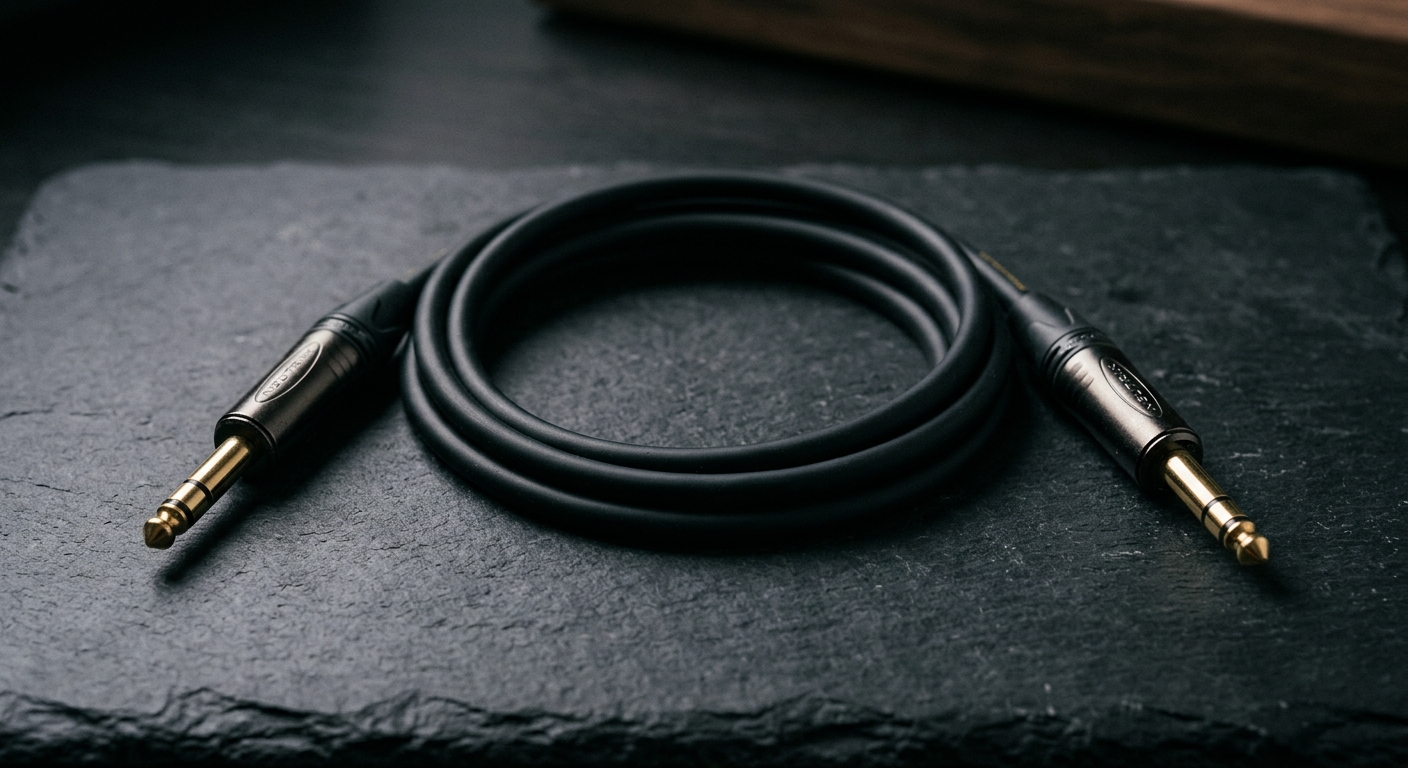
Forever Cables falls into this category. Every cable is hand-soldered using Canare GS-6 (a standard for low-noise, low-capacitance short-run applications) or Mogami W2524, depending on the model. The Workhorse and Right Angle models are built for pedalboard use specifically; the Stage Cable is designed for longer runs from guitar to board or board to amp.
The lifetime guarantee matters here in a way it does not in the budget tier. A forever guarantee from a manufacturer who cannot absorb replacement costs is not actually a guarantee. A boutique operation offering a genuine lifetime replacement is betting on build quality.
What to Actually Buy
For a first pedalboard on a budget: start with mid-range cables (EBS, Lava, or a quality retail option) rather than the cheapest possible pack. The cost difference is small and the reliability difference is real.
For a working gigging board: handmade boutique cables pay for themselves in reduced troubleshooting and replacement cycles. A board that goes wrong mid-set is not worth whatever you saved on cable packs.
For a studio or home board that rarely moves: budget cables can work, but shielding quality matters even in a fixed installation if you have a dense power supply or other electromagnetic sources nearby.
For a large complex board: low-capacitance cable is a meaningful specification here. Canare GS-6 and Mogami W2524 are the standard benchmarks. Any cable using these as the conductor is starting from a strong foundation.
A Note on Solderless Systems
Solderless patch cables (George L's, Evidence Audio Monorail, and others) have an enthusiastic following for good reason. They let you cut cables to exact length and reconfigure your board without tools. For a builder who loves experimenting, that flexibility is valuable.
The trade-off is reliability. The connection depends on a physical compression fit rather than solder, and that fit can loosen with vibration, temperature change, or repeated use. Most working professionals who use solderless systems build in a spare cable or two for exactly this reason.
If you do not reconfigure your board regularly, soldered cables are more reliable over time. If you change your board setup often, a quality solderless system may be worth the trade-off.
The Bottom Line
The market is full of patch cables. Most of the ones you encounter in a guitar store or on a cheap online listing are built to a price point, not a quality standard.
What separates the good ones: hand-soldered connections with real strain relief, effective shielding, low-capacitance cable material, and a connector profile that works for your board layout.
Forever Cables are built to that standard, hand-soldered in small batches with a lifetime guarantee. If you are ready to stop replacing cables and start playing, that is the option we built.
Built for This
Forever Cables are hand-soldered boutique guitar patch cables made by Liferline. Every cable ships with a lifetime guarantee.
Stay in the loop
New gear guides, limited promos, and launch updates. No spam.