What Are Guitar Patch Cables? (And How to Choose the Right Ones)
If you just started building a pedalboard, you have probably encountered the term "patch cable" and wondered how it differs from the regular guitar cable you already own. They look similar at a glance, but they serve a different purpose, and choosing the wrong ones can quietly degrade your tone or leave you chasing mysterious signal problems.
Here is exactly what guitar patch cables are, why they matter, and how to choose the right ones for your setup.
What Is a Guitar Patch Cable?
A guitar patch cable is a short cable used to connect two effects pedals together on a pedalboard. The "patch" part of the name comes from the old recording studio concept of a patch bay, where cables would route signals between different pieces of equipment.
Patch cables carry the same mono, unbalanced audio signal as a standard instrument cable, but they are designed specifically for short runs (typically 3 to 12 inches) between pedals sitting close together. This is different from your instrument cable, which runs 10 to 20 feet from your guitar to the first pedal, or from your amp to the first pedal in your chain.
The key distinction: instrument cables connect your guitar to your pedalboard (or amp). Patch cables connect pedals to each other.
Patch Cables vs. Instrument Cables: What Makes Them Different?
You might wonder: can I just use regular instrument cables cut short? Technically, yes. Electrically, there is no fundamental difference. But in practice, patch cables are designed with several features that matter a lot in a tight pedalboard context.
Short lengths with purpose-built connectors. Pedalboards are dense. Extra cable length means extra slack, which means more cable coiled up somewhere, creating noise potential and clutter. A purpose-built 6-inch patch cable routes cleanly between two adjacent pedals with no excess.
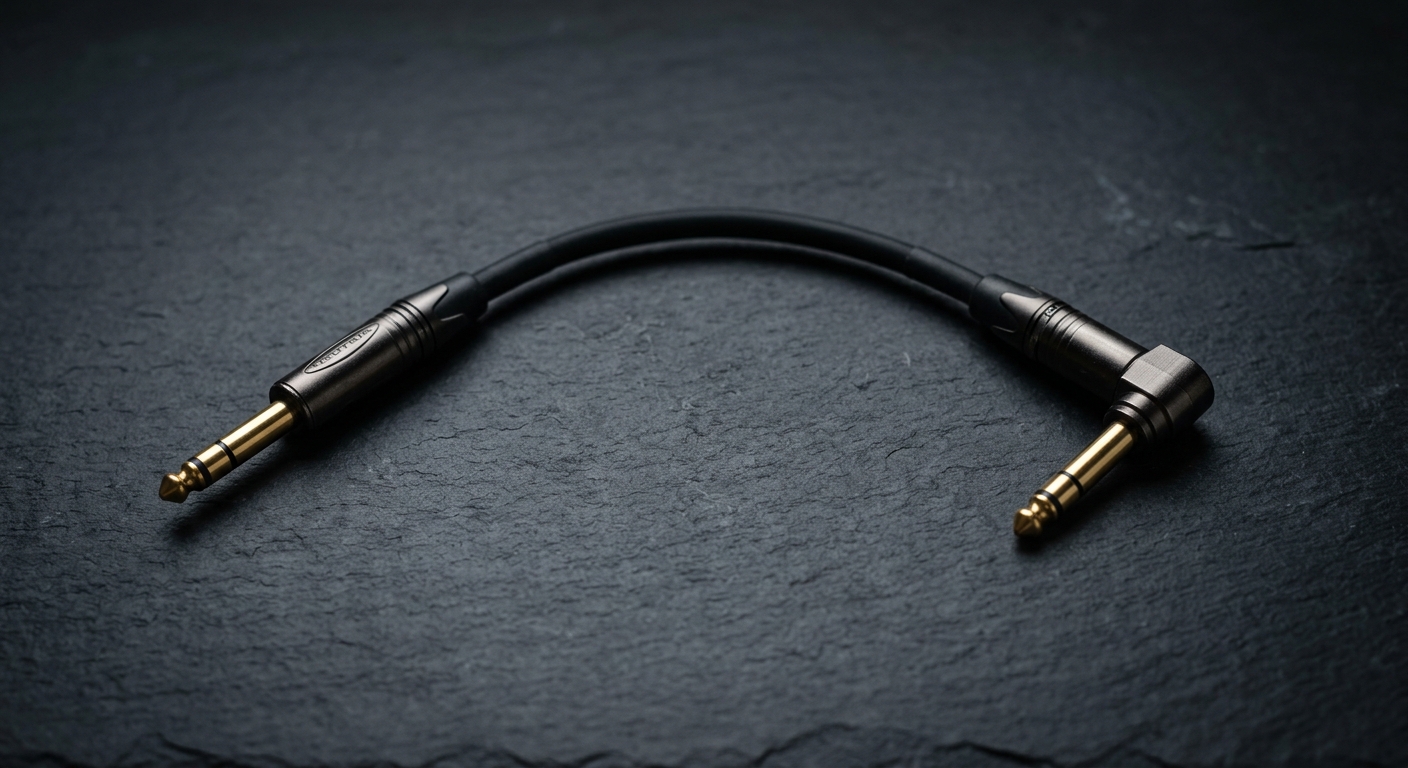
Right-angle connectors. Many patch cables use right-angle (or "pancake") connectors rather than straight jacks. This allows pedals to sit closer together, reduces the height of the connector above the pedal, and takes stress off the jack. If you have ever seen a pedalboard where the cables seem to disappear neatly between pedals, right-angle patch cables are usually how that is done.
Tighter, more flexible jackets. Standard instrument cables have fairly thick outer jackets because they take physical abuse from being stepped on, coiled, transported, and dragged across stages. Patch cables live in a fixed position on a board and need to be flexible enough to navigate tight angles without kinking.
The Two Main Types of Patch Cables
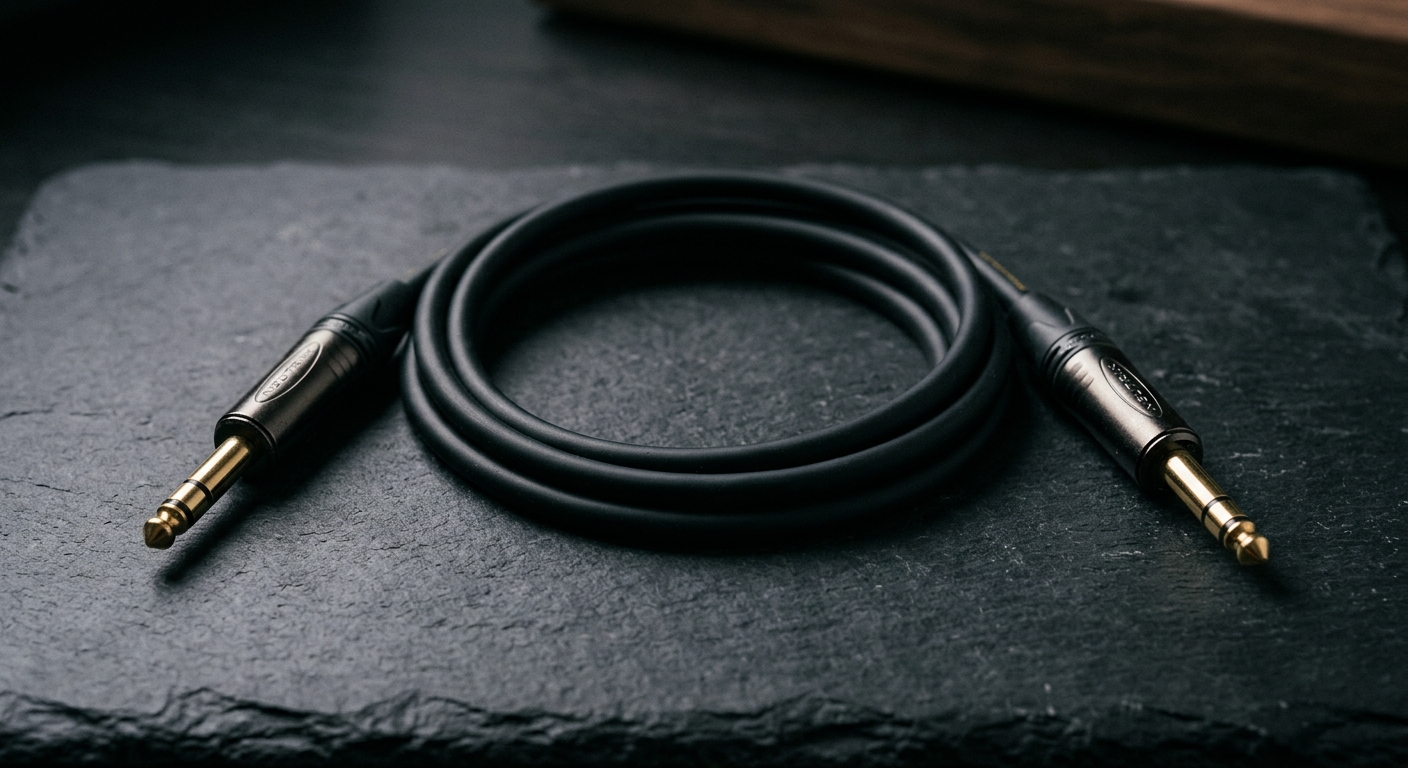
Straight patch cables have standard jacks on both ends, the same as a standard instrument cable. These work well when your pedals have some space between them or when you need to run a cable at an angle across the board.
Right-angle patch cables have one or both connectors angled 90 degrees. These are the most common choice for modern pedalboards because they sit flat against the side of the pedal and allow tighter spacing. You will often see connectors described as "right angle" or "low-profile" or "flat" connectors in product listings.
The Forever Cables Workhorse and Right Angle models are built specifically around this distinction, giving pedalboard builders a reliable handmade option in both configurations.
What to Look For in a Patch Cable
Not all patch cables are created equal. Here is what separates a cable that will serve you for years from one that will cause headaches at the worst moment.
Connector and solder joint quality: the connector is the most failure-prone part of any cable. Cheap stamped connectors can develop intermittent contact as the metal fatigues. Poor solder joints crack under repeated vibration from touring or even everyday practice use. Look for cables that use quality connectors with a solid, consistent solder joint at both ends. Hand-soldered cables, like those in the Forever Cables line, allow for visual inspection of every joint before the cable ships.
Shielding: unshielded or poorly shielded cables can pick up radio frequency interference (RFI) and electromagnetic interference (EMI) from nearby electronics, power supplies, and fluorescent lights. Quality patch cables use braided or foil shielding around the center conductor to block this interference.
Capacitance: every cable has capacitance, a property that causes high frequencies to roll off slightly as cable length and capacitance increase. In a short 6-inch patch cable, this is usually negligible. But if you chain together 10 or 12 patch cables across a large board, total capacitance accumulates. Lower-capacitance cable is the better choice for larger boards. The Canare GS-6 and Mogami W2524 cables used in Forever Cables are both low-capacitance cables chosen for this reason.
Flexibility and jacket material: a stiff cable that does not want to bend will put mechanical stress on the connector at the pedal's input jack over time. Look for cables with flexible outer jackets that will hold their position on the board without fighting back.
Build durability: patch cables on a working pedalboard get plugged and unplugged frequently. The strain relief (the boot or collar at the connector) needs to actually protect the cable where it enters the plug. Cables with minimal or absent strain relief will fail at the connection point first.
How Many Patch Cables Do You Need?
Count the number of connections between your pedals. Five pedals in a chain need four patch cables, one to connect each pair. If you are using a true bypass looper or a switcher, you may need more. Most builders add one or two extras to keep on hand for spares.
A quick formula: number of pedals minus one equals the minimum number of patch cables, assuming a simple linear chain.
Lengths: What to Use Where
3 to 6 inches: adjacent pedals on the same row of a tight board. The most common length for modern builds.
6 to 12 inches: pedals with a small gap between them, or routing across a corner.
12 inches or longer: cross-board connections, or pedalboards with unusual layouts. At this length, a regular short instrument cable may be a better choice depending on connector angle.
When in doubt, size down. A cable that is slightly too short is not usable, but a cable that is slightly too long can usually be routed to avoid excess slack.
Why Quality Patch Cables Are Worth It
The guitar cable market is full of very cheap options. A pack of ten thin, unshielded patch cables will cost a few dollars and will probably work, at least at first. But pedalboard builders learn the same lesson repeatedly: cheap cables fail at inconvenient times, introduce noise, and make troubleshooting harder.
A well-made patch cable, hand-soldered from quality components, is invisible in the signal chain and essentially lasts forever. That is the principle behind the Forever Cables lifetime guarantee: build it right once, and you should never have to replace it.
If you are assembling your first serious pedalboard, investing in quality patch cables from the start costs less in total than buying cheap cables twice.
Getting Started
If you are just getting started with a pedalboard, here is the simplest approach: map out your pedal order and count the connections. Measure the distance between each pair of pedals (or estimate based on your enclosure size). Choose right-angle connectors for tight boards; straight connectors when you have more space. Prioritize shielded, hand-soldered cables with solid connectors.
The Forever Cables Workhorse is the right-angle workhorse (appropriate to the name) for tight modern builds. The Right Angle model offers the same construction with a slightly different connector geometry for specific applications. For longer board-to-board or guitar-to-pedalboard runs, the Stage Cable is built for that purpose.
The Bottom Line
Guitar patch cables are short, purpose-built cables that connect pedals to each other on a pedalboard. They look like tiny instrument cables because, in electrical terms, that is exactly what they are, but the connector design, flexibility, shielding, and build quality matter more at close range than most players expect.
Buy quality once. They last.
Built for This
Forever Cables are hand-soldered boutique guitar patch cables made by Liferline. Every cable ships with a lifetime guarantee.
Stay in the loop
New gear guides, limited promos, and launch updates. No spam.