Mogami vs Canare Patch Cables: Which Is Actually Worth It?
When you start building a serious pedalboard, you quickly learn that patch cables matter. The cheap flat cables with molded connectors look convenient, but they fail fast and inject noise into your signal chain. So you start researching quality options, and two names show up everywhere: Mogami and Canare.
Both have decades of professional credibility. Both come from Japan. Both use materials and construction methods that put them in a completely different category than throwaway cables. And both will cost you significantly more than the generic options at your local music store.
So which one should you actually buy? Is the price difference meaningful? And is there a smarter option that gives you the same quality without the inevitable replacement cycle?
This is not a debate about whether expensive cables sound better than cheap ones. If you are reading this, you already know quality cables matter. This is about choosing between two specific boutique options, understanding exactly what you are paying for, and deciding whether either one makes sense for your rig long term.
Why Guitarists Trust These Brands
Mogami and Canare did not build their reputations selling to weekend warriors or bedroom players. They built them in professional environments where failure is not acceptable.
Mogami cables are the default in recording studios. Walk into Capitol Records, Abbey Road, or any major facility, and you will find racks of Mogami. Their 2524 instrument cable and W2314 patch cable are industry standards because they deliver exceptionally low noise floors, preserve high-frequency detail, and survive the daily abuse of session work.
Canare cables come from the broadcast world, where reliability is measured in decades, not months. Japanese broadcast networks route Canare through concrete walls, wrap them around metal racks, and expect them to work flawlessly for years. The L-2T2S and GS-6 cables are built for installation, not just performance.
Both companies approach cable design with the same philosophy: reliability and noise rejection first, cost second. That professional pedigree means you are not paying for marketing or hype. You are paying for engineering that has been proven in environments where downtime costs real money.
Mogami Patch Cables: The Studio Choice
Mogami patch cables are everywhere in high-end pedalboard builds. Open up Instagram, look at any touring guitarist's rig, and you will see those distinctive gold or silver connectors.
Here is what Mogami gets right:
**Low capacitance design.** Mogami W2314 patch cable measures around 33 picofarads per foot. That is low enough to preserve treble clarity even when you are stacking six or eight patch cables on a pedalboard. Cheap cables with high capacitance act like tone sponges, progressively filtering out high frequencies as your signal passes through each one. Mogami cables keep your tone intact.
**Neglex shielding.** Mogami uses a carbon-impregnated PVC layer between the conductor and the shield, creating two barriers against noise instead of one. This design delivers an exceptionally clean noise floor, even in electrically hostile environments with LED stage lights, wireless systems, and digital gear.
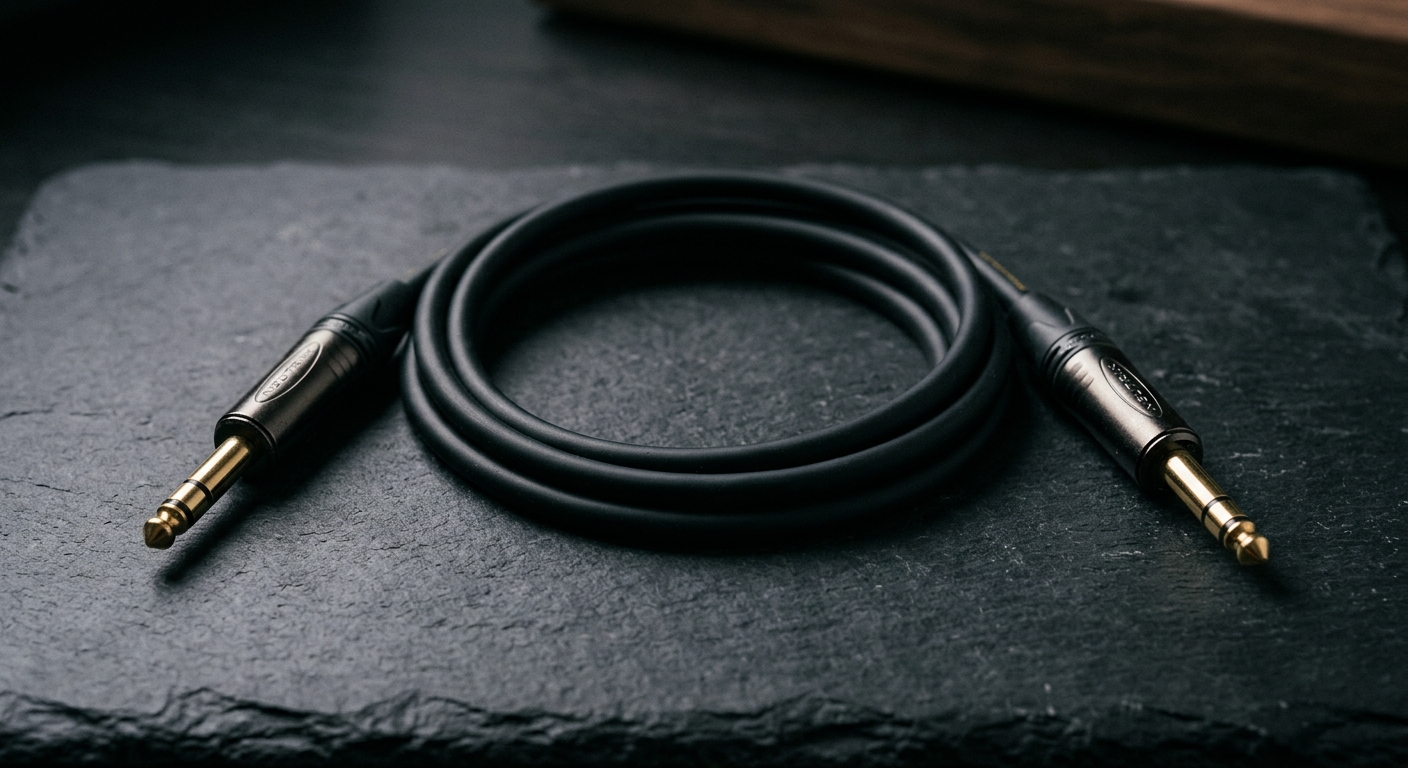
**Premium connectors.** Most Mogami patch cables come terminated with Neutrik or Switchcraft connectors. These are not generic plugs. They use solid barrels, high contact pressure, and strain relief systems that actually protect the solder joint. The connector is where most patch cables fail. Mogami avoids this problem by using the best.
**Consistent quality control.** When you buy a Mogami cable, you get what you expect. The construction is consistent, the materials are genuine, and the performance matches the spec sheet. There are no surprises.
The downsides? Mogami patch cables are expensive. A 6-inch patch cable runs $20 to $30 depending on the retailer. If you are wiring up a pedalboard with ten pedals, you are looking at $200 to $300 just in patch cables. And while Mogami cables are durable, they are not indestructible. The jacket can stiffen in cold weather, and the connectors will eventually wear out with repeated plugging and unplugging.
Canare Patch Cables: The Workhorse Option
Canare takes a different approach. Their cables are designed for abuse, built to survive installation work, road transport, and the kind of rough handling that would kill most cables.
Here is what Canare gets right:
**Extreme durability.** Canare cables use thicker jackets, over-engineered strain relief, and shielding that can survive being pulled through conduit, stepped on, and coiled aggressively. These are cables designed to outlast the pedals you plug them into. If you gig regularly or store gear in less-than-ideal conditions, Canare cables will hold up longer than Mogami.
**Superior RF rejection.** Canare uses quad-shield construction: two spiral shields and two foil wraps, alternating in opposite directions. This gives you exceptional rejection of radio frequency interference and electromagnetic noise. If you play festivals, clubs with LED walls, or stages packed with wireless gear, Canare cables will stay quieter than almost anything else.
**Better value.** Canare patch cables typically cost 20 to 30 percent less than Mogami. A 6-inch Canare patch cable runs $15 to $25. Over a full pedalboard build, that difference adds up. And because Canare cables last longer, the cost per year of ownership is even better.
**Stays flexible in all conditions.** Despite the heavy shielding, Canare cables remain flexible even in cold weather. Mogami cables can get stiff when temperatures drop. If you play outdoor gigs or store gear in unheated spaces, Canare handles it better.
The downsides? Canare cables have slightly higher capacitance than Mogami. The L-2T2S measures around 45 picofarads per foot. That is still low, but if you are stacking eight or ten patch cables, the cumulative effect becomes audible. You lose a bit of treble sparkle compared to Mogami. And Canare cables are harder to find in pre-made configurations. You can get them, but not at every Guitar Center.
Head-to-Head: What Actually Matters
Let's break down the meaningful differences.
Shielding and Noise Rejection
**Winner: Depends on your environment.**
Mogami excels in controlled environments. The Neglex construction gives you a marginally lower noise floor in studios or venues with predictable interference. Canare excels in chaotic environments. The quad-shield design gives you better rejection when you are surrounded by LED lights, digital stage gear, wireless systems, and unpredictable EMI sources.
For home studio use or clean stages, Mogami has the edge. For festivals, clubs, and electrically noisy venues, Canare wins.
Durability and Longevity
**Winner: Canare.**
Canare cables are built for installation work. Thicker jackets, better strain relief, and construction designed to survive rough handling. Mogami cables are durable, but they are optimized for studio use where cables get treated gently. If your cables get thrown in gig bags, stepped on by bandmates, or coiled tightly after every show, Canare will outlast Mogami.
Capacitance and Tone Preservation
**Winner: Mogami.**
Lower capacitance means better high-frequency response. Mogami W2314 at 33 pF/ft beats Canare L-2T2S at 45 pF/ft. For a single 6-inch patch cable, that difference is inaudible. But when you stack six or eight patch cables on a pedalboard, the cumulative capacitance adds up. If you care about preserving every bit of treble clarity, Mogami is the better choice.
Connector Quality
**Winner: Tie.**
Both brands use Neutrik or Switchcraft connectors on their premium patch cables. Both offer low-profile pancake plugs for tight pedalboard spacing. Both use proper strain relief and high-quality solder joints. There is no meaningful difference here.
Price and Value
**Winner: Canare.**
Canare costs 20 to 30 percent less than Mogami and lasts longer under real-world conditions. If you are building a pedalboard with eight patch cables, that is a $50 to $80 savings. Over the lifetime of ownership, Canare delivers better value.
Availability
**Winner: Mogami.**
Mogami patch cables are easier to find at retail music stores and come in more pre-made configurations. If you need a cable today, Mogami is the safer bet.
Who Should Choose Mogami?
Mogami patch cables make sense if you record at home or in studios and want the lowest possible noise floor, you prioritize tone preservation and treble clarity above all else, you treat your cables carefully and store them in climate-controlled environments, you value brand prestige and want the cables professional studios use, or you need cables immediately from a local retailer.
Mogami is the choice for players who want studio-grade performance and are willing to pay for it.
Who Should Choose Canare?
Canare patch cables make sense if you gig regularly and need cables that survive real-world abuse, you play in electrically noisy environments with heavy RF and EMI, you are building a full pedalboard and want to save money without sacrificing quality, you store gear in garages, vans, or unheated spaces, or you are comfortable ordering online or terminating your own cables.
Canare is the choice for working players who need reliability and durability first, prestige second.
The Problem Neither Brand Solves
Here is the uncomfortable truth about Mogami and Canare: both cables eventually fail.
A Mogami patch cable might last two years with regular use. A Canare might last three. But eventually, the connector will wear out. The solder joint will crack. The jacket will develop a weak spot. And when that happens, you replace it. Then you replace it again. And again.
Over five years, that $25 Mogami patch cable becomes $125 in replacement costs. That $18 Canare becomes $90. You are not buying a cable. You are subscribing to one.
This is not a criticism of Mogami or Canare. They build excellent products. But no cable company profits from cables that last forever. The business model depends on you coming back every couple of years to buy another one.
The Lifetime Guarantee Alternative
This is where Forever Cables changes the calculation.
We build patch cables using the same materials you will find in Mogami and Canare: oxygen-free copper conductors, multi-layer shielding, low capacitance dielectrics, and Neutrik or Switchcraft connectors. Our cables deliver the same noise rejection, tone preservation, and build quality you expect from boutique options.
But we do one thing Mogami and Canare do not: we guarantee them for life.
Not the life of the cable. Your life. If a Forever Cable patch cable ever fails, we replace it. No receipt required. No questions asked. No expiration date.
That $25 Mogami costs $25 every time you replace it. A Forever Cable costs $25 once. After that, replacement is free.
We can offer this guarantee because we build cables that do not fail. American-made, hand-soldered, tested individually before they ship. We use strain relief that actually protects the solder joint. Connectors designed for thousands of plug cycles. Shielding that stays intact under real-world stress.
Most cable companies want you to replace your cables every few years. We want you to keep them for decades.
Real-World Performance: Studio vs Stage vs Pedalboard
Let's talk about how these cables actually perform in the three environments where guitarists use them most.
**Home Studio Use:** In a controlled environment with minimal EMI, Mogami patch cables have a slight edge. The lower capacitance preserves treble detail, and the Neglex shielding delivers a marginally cleaner noise floor. If you are tracking guitars for release-quality recordings and obsess over every detail of your tone, Mogami is worth the premium.
**Live Performance:** On stage, Canare wins. The quad-shield construction handles RF interference from wireless systems, LED stage lights, and digital gear better than Mogami. The thicker jacket and better strain relief survive the abuse of load-in, setup, teardown, and transport. And the lower price means replacing a damaged cable mid-tour does not hurt as much.
**Pedalboard Wiring:** For pedalboards, it depends on how you use them. If your board lives in a studio and never moves, Mogami gives you slightly better tone preservation. If you gig with your board, travel frequently, or coil cables tightly to save space, Canare's durability advantage outweighs Mogami's tone advantage.
Forever Cables work in all three environments because we do not compromise. Studio-grade shielding and capacitance, stage-grade durability, and a lifetime guarantee that covers every failure mode.
What About DIY Cable Building?
Both Mogami and Canare sell bulk cable for DIY termination. If you are comfortable soldering, you can build your own patch cables and save money.
Mogami W2314 bulk cable runs around $1 to $1.50 per foot. Canare L-2T2S runs $0.75 to $1 per foot. Add Neutrik or Switchcraft connectors at $3 to $5 each, and you can build patch cables for $8 to $12 apiece instead of $20 to $30.
The downside? You need soldering skills, proper tools, and time. A badly soldered patch cable is worse than a cheap factory cable. And if you screw up the termination, you waste materials and have to start over.
If you already solder your own cables and enjoy the process, DIY is a great option. If you do not, the risk of creating unreliable cables outweighs the cost savings. Buy pre-made cables from a company that tests them before shipping.
The Lifetime Guarantee Makes the Difference
If you are choosing between Mogami and Canare, you are already willing to pay for quality. Both are excellent cables. Both will outperform cheap alternatives. And both will eventually need to be replaced.
Forever Cables eliminate the replacement cycle entirely. Same performance, same materials, same professional-grade construction. But instead of buying the same cable every two years, you buy it once.
Our lifetime guarantee is not a marketing gimmick. It is a business model. We profit by building cables that last, not by selling you replacements. When we hand-solder every connection, test every cable before it ships, and use materials designed for decades of use, we can stand behind that guarantee without losing money.
Check out our full product lineup at /products to see what we offer, or read about our lifetime guarantee at /guarantee to understand exactly what it covers. If you have questions about which cables work best for your specific setup, our team has decades of experience building pedalboards and can help you choose the right configuration.
Final Verdict: Mogami, Canare, or Forever Cables?
If you can only choose between Mogami and Canare:
**For home studio use:** Mogami W2314 patch cables. Lower capacitance, slightly better tone preservation, cleaner noise floor in controlled environments.
**For live performance:** Canare L-2T2S or GS-6 patch cables. Better RF rejection, more durable construction, lower cost, superior flexibility in all weather conditions.
Both are excellent cables. Both will outperform cheap alternatives by a significant margin. And both will eventually need to be replaced.
If you want to stop replacing cables, Forever Cables solve that problem permanently. Same professional-grade performance. Lifetime guarantee. One purchase, no repeats.
Shop Forever Cables and build your pedalboard once at https://liferline.com/products.
Built for This
Forever Cables deliver the same performance as Mogami and Canare, backed by a lifetime guarantee. One purchase, no repeats. Shop our full lineup and build your pedalboard once.
Stay in the loop
New gear guides, limited promos, and launch updates. No spam.