George L's vs. Lava Cable: Which Solderless Patch Cable System Is Worth It?
Building your own patch cables sounds like the kind of thing only guitar techs and obsessive gear nerds would bother with. Then you price out a full pedalboard's worth of pre-made cables and realize you are about to spend $200 on eight pieces of wire.
That is where solderless cable systems come in. No soldering iron, no heat shrink, no waiting for parts to cool down. Just cut, strip, twist, and plug. George L's and Lava Cable are the two names that dominate this category, and for good reason. Both systems work. Both have loyal followings. And both will save you money if you are wiring up a pedalboard.
But they are not the same. Different assembly methods, different durability profiles, different costs over time. And depending on how you use your cables, one will make a lot more sense than the other.
This is not about whether DIY cables are better than pre-made ones. This is about choosing between the two most popular solderless systems and understanding what you are actually signing up for.
What Is George L's?
George L's cables have been around since the 1980s. Originally designed for studio patch bays, they became a favorite among pedalboard builders because of how simple they are to assemble.
The system uses a .155-inch diameter cable and brass barrel connectors. You strip the cable jacket, slide the shield back, insert the center conductor into the plug, and tighten a set screw. No solder. No crimping. The connection is purely mechanical.
George L's cable is available in bulk spools (25 feet, 50 feet, 100 feet) and the plugs are sold separately. You buy what you need, cut to length, and build as many cables as your board requires.
The specs: .155" diameter cable (thinner than most instrument cables). Capacitance: 12.2 picofarads per foot (very low). Copper core with braided shield. Brass barrel connectors with set screw assembly. Right-angle plugs only (no straight connectors).
The cost: 25-foot cable spool: $30 to $35. Pack of 10 plugs: $25 to $30. Total startup cost for a typical pedalboard (8 cables): around $60 to $70.
George L's is everywhere. You can find it at Guitar Center, Sweetwater, and most online retailers. If you need cable today, you can get George L's today.
What Is Lava Cable?
Lava Cable launched in the mid-2000s with the ELC (Evidence Lyric Collection) solderless system. It was designed specifically for pedalboards, with a focus on durability and ease of assembly.
The Lava system uses a slightly thicker cable (around .170 inches) and a two-piece connector. You strip the cable, slide on the outer housing, insert the cable into the plug, and tighten a collar. The shield and conductor are both captured mechanically. Like George L's, no solder required.
Lava cable is also available in bulk spools, with plugs sold separately. The ELC system is modular, so you can mix right-angle and straight plugs depending on your board layout.
The specs: .170" diameter cable (slightly thicker than George L's). Capacitance: 18 picofarads per foot (still very low). Oxygen-free copper core with spiral shield. Two-piece plug system with compression collar. Available in right-angle and straight configurations.
The cost: 10-foot cable spool: $15 to $20. Pack of 10 plugs: $35 to $40. Total startup cost for a typical pedalboard (8 cables): around $75 to $85.
Lava Cable is less widely available in retail stores, but easy to find online. Most players order direct from Lava or through Sweetwater and Amazon.
Head-to-Head Comparison
Let's break down what actually matters when you are choosing between these two systems.
Ease of Assembly
Winner: George L's.
George L's assembly is absurdly simple. Strip the jacket, fold back the shield, insert the conductor, tighten the screw. It takes about 30 seconds per cable once you get the hang of it. The plugs are forgiving. You can over-tighten them and they still work. You can under-tighten them and they usually still work. It is hard to mess up.
Lava Cable takes a bit more finesse. You need to strip the jacket to the exact length (too short and the shield does not make contact, too long and the housing does not seat properly). The two-piece design means more parts to keep track of. And if you do not tighten the collar evenly, the connection can be intermittent.
That said, Lava is still easier than soldering. But if you are building cables for the first time, George L's has a shallower learning curve.
Durability
Winner: Lava Cable.
This is where the two systems diverge most clearly.
George L's cables work great when they are new. The problem is the set screw. Over time, vibration loosens it. Temperature changes cause the brass to expand and contract. And if you disconnect and reconnect your cables frequently, the screw wears a groove into the conductor. Eventually, the connection degrades. You get crackling, intermittent signal, or complete dropout.
Some players fix this by periodically re-tightening the screws. Others just rebuild the cable. Either way, George L's cables require maintenance. They are not set-it-and-forget-it.
Lava Cable uses a compression collar instead of a set screw. Once it is tightened, it stays tight. The two-piece design distributes stress more evenly, so the connector does not wear a groove into the wire. And because the outer housing protects the connection point, it is less vulnerable to damage from being stepped on or yanked.
Lava cables still fail eventually, but they tend to last longer than George L's. If you gig regularly or transport your board frequently, Lava's durability advantage is real.
Tone Quality
Winner: Tie, with a slight edge to George L's.
Capacitance is the spec that matters most for tone. Lower capacitance means less high-frequency rolloff.
George L's measures 12.2 pF/ft. Lava Cable measures 18 pF/ft. For a one-foot cable, that is a difference of about 6 picofarads. Is that audible? On its own, probably not. But if you have six or seven cables in your signal chain, the cumulative difference is around 40 picofarads. That can soften your treble response slightly.
In real-world use, most players cannot hear the difference. Both cables are low-capacitance enough to preserve high-end clarity. If you have exceptionally bright pickups or you are running long cable runs, George L's might have a marginal advantage. For most setups, it is a wash.
Flexibility and Handling
Winner: George L's.
George L's cable is thinner and more flexible. It bends easily, routes cleanly on tight boards, and does not fight you when you are trying to place pedals close together.
Lava Cable is slightly thicker and a bit stiffer. It is not a problem on most boards, but if you are trying to maximize pedal density on a small board, George L's gives you more routing options.
On the flip side, Lava's thicker cable feels more substantial. Some players prefer that. It is a personal preference thing.
Connector Options
Winner: Lava Cable.
George L's only makes right-angle plugs. If you need a straight connector, you are out of luck. For most pedalboards, this is fine. But if you have top-mounted jacks with plenty of clearance, or if you want a straight-to-right-angle cable for routing flexibility, George L's cannot do it.
Lava Cable offers both right-angle and straight connectors. You can mix and match. That flexibility matters if you have an unusual board layout or you are using the cables for something other than pedal-to-pedal connections.
Cost Over Time
Winner: Lava Cable.
This one is counterintuitive, because George L's has a lower upfront cost.
For your first set of cables, George L's is cheaper. $60 to $70 gets you everything you need for a typical pedalboard. Lava runs $75 to $85 for the same setup.
But George L's cables need to be rebuilt or re-tightened more often. If you rebuild a cable every six months, you are buying new plugs. If you rebuild your entire board every year, you are essentially paying the startup cost again. Over three years, that $60 system becomes a $180 system.
Lava cables last longer. You build them once, and they keep working. Even if you have to rebuild one or two over time, the cost per year of ownership is lower.
If you are only building cables once and never touching them again, George L's saves you $10 to $15. If you are maintaining a board over multiple years, Lava comes out ahead.
Who Should Choose George L's?
George L's makes sense if:
You are building cables for the first time and want the simplest assembly process. You have a small pedalboard with tight spacing and need thin, flexible cables. You only need right-angle connectors. You do not mind occasional maintenance (re-tightening screws every few months). You want the lowest upfront cost. You prioritize absolute minimum capacitance.
George L's is the cable for players who want DIY simplicity and are comfortable with periodic upkeep.
Who Should Choose Lava Cable?
Lava Cable makes sense if:
You gig regularly and need cables that stay reliable without maintenance. You want the option to use straight connectors. You prefer a more robust, substantial-feeling cable. You are willing to spend a bit more upfront for better long-term durability. You do not want to re-tighten screws or rebuild cables every few months.
Lava Cable is the system for working players who want to build their cables once and move on.
The Problem Both Systems Share
Here is what neither George L's nor Lava Cable eliminates: they both still fail.
A George L's cable might last six months before the set screw loosens. A Lava cable might last two years before the conductor fatigues. But both systems rely on mechanical connections, and mechanical connections wear out. The plug loosens. The conductor breaks. The collar cracks. And when that happens, you rebuild it. And then you rebuild it again.
You are not buying a permanent solution. You are renting one, paying in time instead of money.
And if you add up the hours spent stripping cable, assembling plugs, testing connections, and troubleshooting failures, you start to realize that DIY is not always cheaper. It just shifts the cost from dollars to labor.
The Third Option: Skip the DIY Entirely
This is where Forever Cables changes the equation.
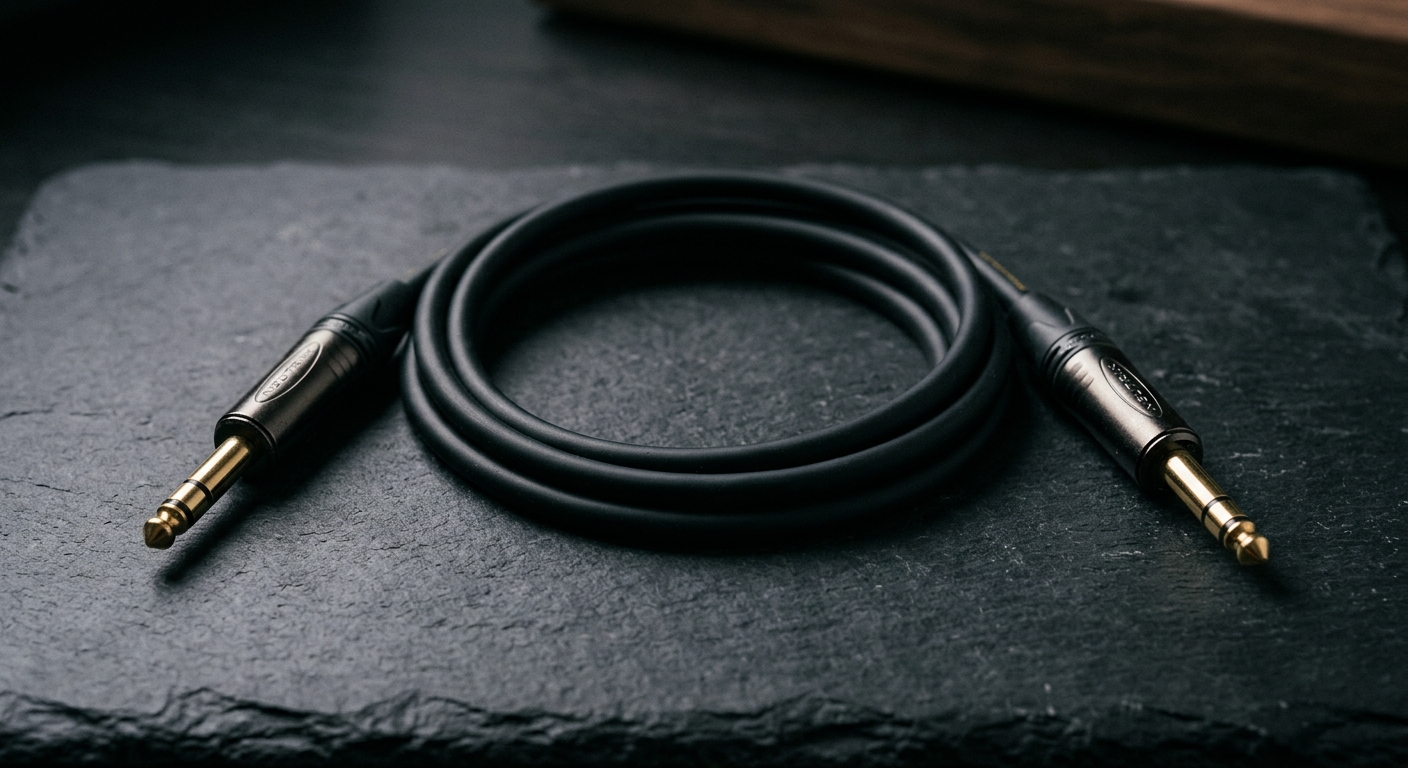
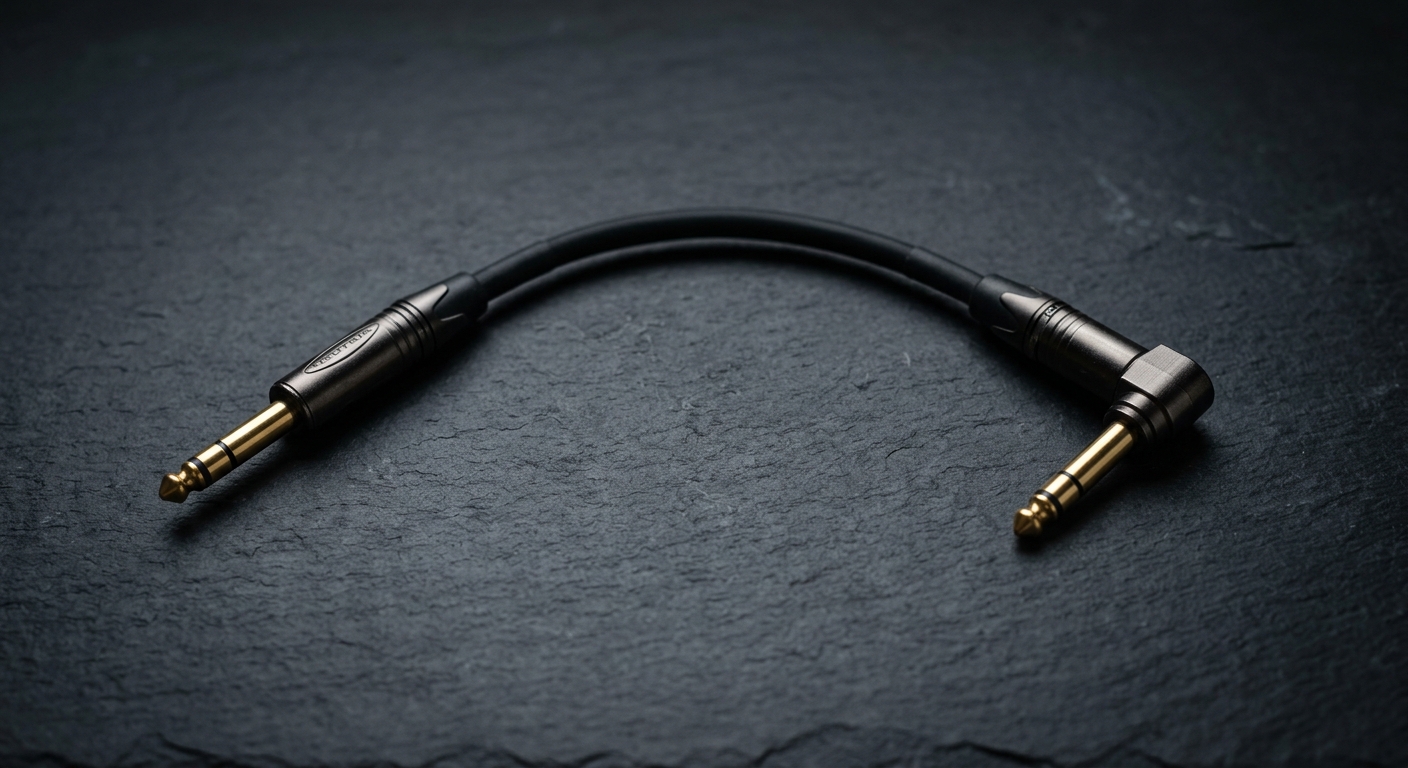
We build patch cables the old-fashioned way: hand-soldered, strain-relieved, tested before they ship. Oxygen-free copper conductors. Multi-layer shielding. Neutrik and Switchcraft connectors. The same materials you will find in professional studio cables, but sized for pedalboards.
Capacitance is low (comparable to both George L's and Lava). Shielding is excellent (better than either, because we use foil-and-braid, not just braid). And the connectors are built to last decades, not months.
But here is the part that makes the math different: we guarantee them for life.
Not "life of the cable." Your life. If a Forever Cable fails, we replace it. No questions. No receipt. No expiration.
A George L's cable costs $8 to build. If you rebuild it three times over three years, that is $32 per cable. A Lava cable costs $10 to build. If you rebuild it once, that is $20 per cable. A Forever Cable costs $30 once. After that, it is free.
Most cable companies want you to replace your cables. We want you to keep them.
If you were willing to spend an afternoon building solderless cables to save money, Forever Cables give you that same long-term savings without the labor. You pay once, and you are done.
Final Verdict
If you are committed to building your own cables and you can only choose between George L's and Lava Cable:
For ease of assembly and lowest upfront cost: George L's. Simpler to build, more forgiving, cheaper to start. Just be ready to maintain them.
For durability and long-term value: Lava Cable. More robust connectors, better longevity, worth the extra $10 to $15 upfront.
Both systems work. Both will save you money compared to buying pre-made boutique cables. And both will eventually need maintenance or replacement.
If you want to skip the assembly, the maintenance, and the rebuilding, Forever Cables eliminate all of it. Same performance. Lifetime guarantee. One purchase, no rebuilds.
Built for This
Forever Cables eliminate the assembly, the maintenance, and the rebuilding. Hand-soldered with Neutrik connectors on Canare GS-6 or Mogami W2524 wire, every cable ships with a lifetime guarantee.
Stay in the loop
New gear guides, limited promos, and launch updates. No spam.